AI in Classrooms: Smarter Teaching, Deeper Lessons
Our classrooms are on the cusp of an educational revolution, driven by AI. We explore its practical applications and enduring impact.
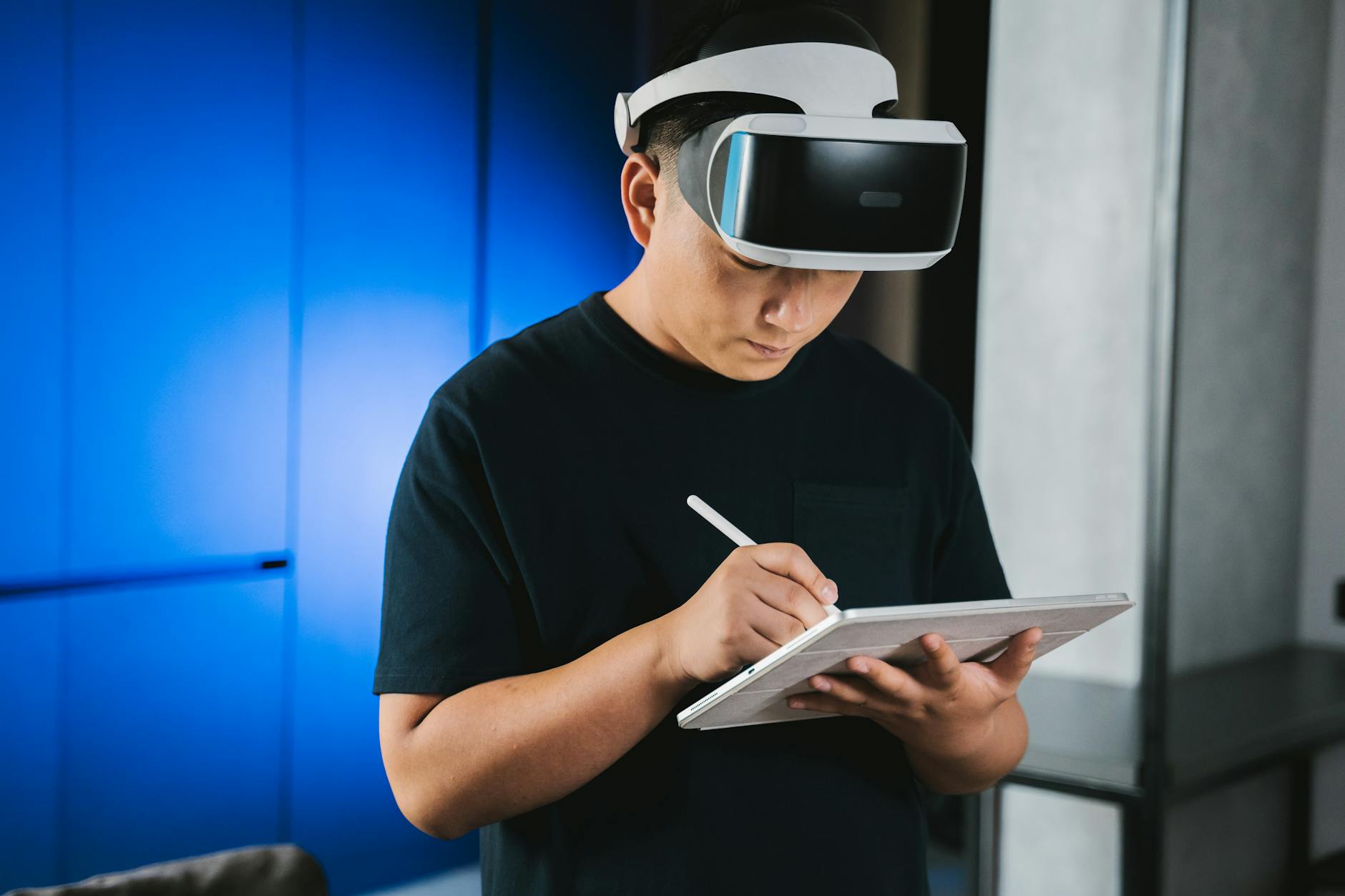
A chalk dust motes in the afternoon sun, a familiar scent of old books and young minds lingers. But something is changing. In a small school in Bangalore, a geometry lesson is unfolding not just on the blackboard, but simultaneously on thirty tablets, each responding to individual student queries. Across the globe, in a quiet library in Manchester, a history student crafts an essay with the aid of an AI tutor, not as a replacement for critical thought, but as a tireless research assistant and a grammar guide that never tires. These aren't visions of some distant future; they are the present we are beginning to inhabit, one classroom at a time. The quiet revolution, powered by artificial intelligence, is not roaring, but whispering its way into our methods and our minds.
The Promise of Personalisation
The enduring dream of every educator has been to reach every student, exactly where they are. For decades, this ideal remained largely unrealised, a casualty of class sizes and time constraints. AI changes the equation. Consider the adaptive learning platforms now common in Riyadh's private schools, tailoring mathematical problems to a child's unique pace, identifying misconceptions before they rigidify. This isn't merely about efficiency; it's about fostering a deeper, more personal engagement with the material. The algorithms learn not just what a student knows, but how they learn best, adapting the journey without judgment.
In our work at NASCA with educators in Nairobi, we observed firsthand how intelligent tutoring systems transformed remediation. Instead of a teacher juggling the needs of twenty different learners, the AI provided immediate, targeted feedback. This freed the human educator to focus on the nuances of emotional development, the sparks of creativity, and the complex discussions that only human interaction can truly cultivate. The AI becomes a tireless, infinitely patient teaching assistant, allowing the teacher to be more fully, more profoundly, human.
Beyond the Bell Curve: Democratising Access
One of the most consequential, yet often overlooked, aspects of AI in education is its capacity to dismantle barriers. For a student in a remote village in India, access to world-class educational resources was once an impossible dream. Now, with AI-powered translation and text-to-speech technologies, lectures from MIT or Oxford are within reach, translated instantly and responsively. This democratisation of knowledge isn't just about content; it's about methodology. We see this in the emerging tools offering alternative assessment methods, moving beyond the confines of standardised tests that often fail to capture the breadth of a student's understanding or their unique intellectual strengths.
The true power of AI in education lies not in replacing the teacher, but in liberating them to teach more effectively, and in democratising access to knowledge in ways we once thought impossible.
Consider the dyslexic student in a US elementary school, who once struggled with written assignments. AI-powered writing aids now offer not just spell-check, but grammatical suggestions, vocabulary expansion, and even structural improvements. This isn't "cheating"; it's empowering a learner with a tool that levels the playing field, allowing their ideas to shine through unhindered by mechanical difficulties. The goal is not to outsource cognitive effort, but to remove unnecessary obstacles to its expression.
The Ethical Imperative and the Human Touch
Of course, no revolution is without its shadows. The ethical considerations are paramount: data privacy, algorithmic bias, and the potential for over-reliance. We must be vigilant. The digital divide, far from being bridged entirely, could be exacerbated if access to these powerful tools remains unequal. Furthermore, the human element of education, the mentorship, the spontaneous classroom discussion, the empathy instilled by a caring teacher, must never be diminished. AI should augment, not supplant, these irreplaceable aspects.
The challenge for educators, administrators, and policymakers in places like Singapore and the UAE, where AI adoption is swift, is not merely to integrate these tools, but to integrate them wisely. It means thoughtful curriculum design, robust teacher training, and continuous ethical evaluation. It means fostering digital literacy not just in students, but in ourselves, so that we understand the nature of the algorithms we invite into our learning spaces. The future of education is not simply technological; it is deeply, profoundly human, shaped by the choices we make today about how we wield these powerful new instruments.
The quiet revolution will continue. Our task is to ensure it leads to a more equitable, more engaging, and ultimately, more human-centric learning experience for all.", hero_alt=
Frequently asked
No. AI is acting as a powerful assistant, automating administrative tasks and providing personalized tutoring, which frees teachers to focus on complex human interactions, emotional development, and creative discussions.
AI enables truly personalized learning paths for students, democratizes access to high-quality educational resources globally, and helps identify and address learning gaps quickly, making education more equitable and effective.
Key concerns include data privacy for students, algorithmic bias that could perpetuate inequalities, and the risk of over-reliance on technology diminishing critical human skills and interactions. Careful implementation and oversight are crucial.
Schools and policymakers must prioritize infrastructure development, provide devices and internet access to underserved communities, and invest in teacher training to ensure effective and inclusive integration of AI tools.
Yes. AI is enabling more diverse and adaptive assessment methods that move beyond traditional standardized tests. These tools can evaluate understanding in nuanced ways, identifying strengths and areas for growth that conventional methods might miss.
One piece of writing on AI in education. Every Monday morning. From the editors of NASCA, in seven countries. No spam, unsubscribe in one click.
Bring NASCA to your school.
If this piece resonated, the next step is a conversation. A real person from our team will reply within one working day.