India's Young Innovators Redefine Olympiad Success
India's next generation of Olympiad aspirants is embracing new AI tools, moving beyond traditional methods to cultivate deeper understanding and ignite curiosity.
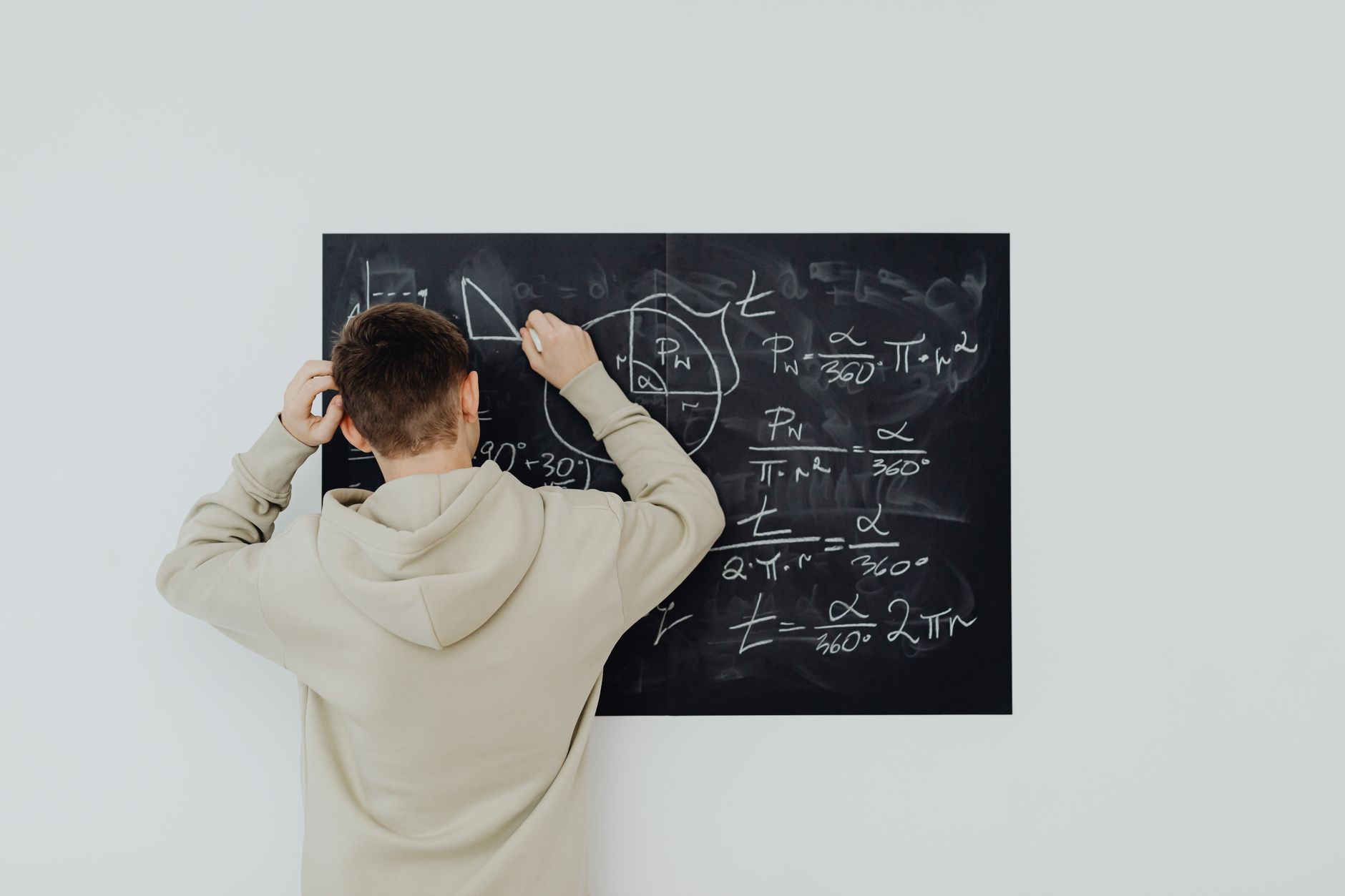
At sixteen years old, Anya works through complex geometry problems not with a textbook, but with a holographic projection of a dodecahedron rotating slowly beside her tablet. An AI tutor, its voice a calm presence, guides her through spatial reasoning. This scene, unfolding in Bengaluru, is a far cry from the frantic, late-night cramming many educators and parents remember from their own school days. It is focused, personalized, and, in its own way, serene.
For decades, Olympiad preparation in India has been a defining experience, often a gruelling marathon of textbooks, coaching classes, and an endless stream of practice problems. The aim has always been to identify and cultivate exceptional talent in science, mathematics, and informatics. Yet, the reality frequently leaned heavily on rote memorization, prioritizing the recall of formulas and algorithms over a genuine understanding of underlying principles. While effective in producing top-tier professionals, this traditional system often inadvertently suppressed the very curiosity it initially sought to inspire.
The AI-Powered Tutor in Every Home
The arrival of sophisticated AI in the educational sphere has been nothing short of a quiet revolution. No longer confined to the sterile environments of research labs, these tools are now accessible to a student in a remote village in Rajasthan as easily as to one in a bustling Mumbai suburb. We are seeing platforms that intelligently identify a student’s knowledge gaps, crafting bespoke learning paths. This isn’t simply about providing answers; it’s about understanding why a student struggles with a particular concept, then offering alternative explanations, interactive simulations, and even historical context to deepen their understanding.
Consider the National Standard Examination in Astronomy (NSEA). Traditionally, a student would grapple with abstract concepts of celestial mechanics. Now, AI-driven simulations can recreate gravitational interactions, planetary orbits, and the physics of black holes in a visual, intuitive manner. This moves beyond textbook diagrams, embedding knowledge through immersive experience. The challenge remains to ensure these tools enhance, rather than replace, the critical thinking fostered by a good human mentor.
Shifting from Recall to Reasoning
One of the most profound shifts facilitated by AI is the move away from mere factual recall. Olympiads, at their core, test problem-solving abilities and conceptual understanding. An AI can now generate an infinite variety of novel problems, pushing students beyond the familiar patterns of past papers. It’s no longer about memorizing the solution to a specific type of problem, but about developing the agile thinking required to tackle unprecedented challenges.
"The true measure of intelligence is not knowledge but imagination." - Albert Einstein
This emphasis on reasoning is critical. In a world increasingly driven by complex, unforeseen problems, the ability to think creatively and apply foundational principles in new ways is far more valuable than the capacity to regurgitate information. India
Frequently asked
No. AI acts as a sophisticated assistant, personalizing learning paths and generating practice problems. It frees educators to focus on mentorship, critical thinking, and addressing emotional needs, aspects AI cannot replicate.
Many platforms are emerging, offering both free and subscription-based models. Schools and educational trusts in India are also integrating these tools, making them available through digital initiatives and learning centers.
The intention is the opposite. With internet penetration and affordable devices, high-quality AI-driven education can reach remote areas, democratizing access to resources traditionally confined to urban coaching hubs. However, equitable access remains a challenge that requires sustained effort from policymakers.
Absolutely. Critical thinking, independent problem-solving, and resilience are paramount. AI should be a tool for enhancement, not a crutch. Educators and parents must guide students to use AI wisely, focusing on understanding, not just obtaining answers.
One piece of writing on AI in education. Every Monday morning. From the editors of NASCA, in seven countries. No spam, unsubscribe in one click.
Bring NASCA to your school.
If this piece resonated, the next step is a conversation. A real person from our team will reply within one working day.