UAE Students Build Tomorrow's Deserts, One Robot at a Time
Learn how UAE schools are moving beyond traditional methods, engaging students in hands-on projects that build critical skills for the future. This approach fosters innovation directly in the classroom.
The Ministry of Education in Abu Dhabi recently issued a call that wasn't about another standardized test. Instead, it was an invitation to observe a different kind of learning in action. What I encountered felt genuinely new.
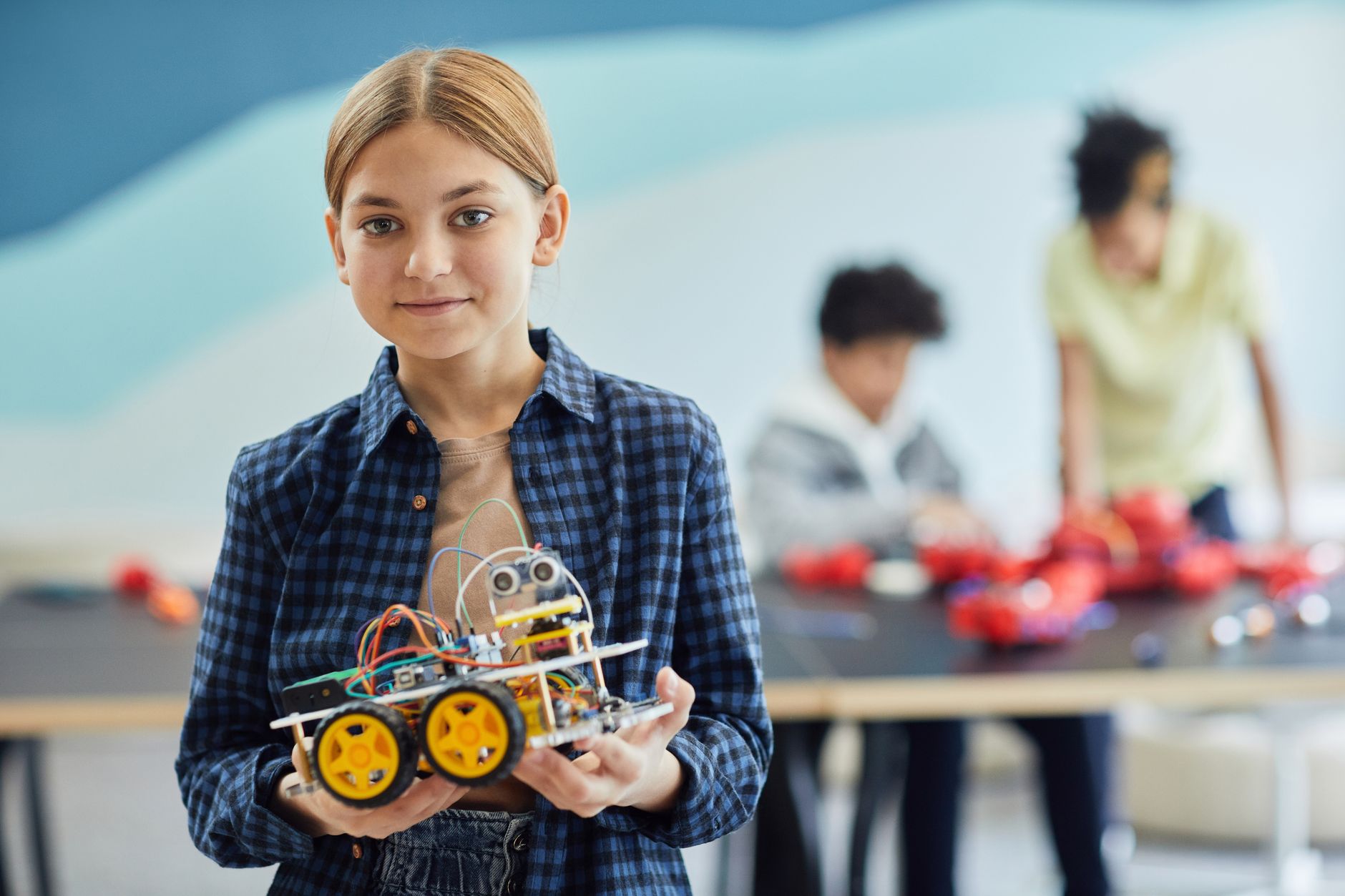
At the Dubai Design District, classrooms weren't filled with sleek robots but with students huddled over Arduino boards, grappling with Python scripts, and sketching plans for a self-sustaining desert habitat. The atmosphere wasn't one of sterile quiet, but alive with the clatter of 3D printers, the hum of collaboration, and the occasional cheer when a circuit finally connected. These weren’t just students; they were budding engineers and environmentalists tackling a significant challenge: designing an automated watering system for indigenous Ghaf trees, built to thrive in the harsh Emirati climate.
Beyond the Blueprint: Learning by Doing
Too often, STEAM education is presented as a series of disconnected subjects. Mathematics in one class, science in another, engineering a distant ideal. What we observed in Sharjah and Ras Al Khaimah, and now here in Dubai, was a seamless integration. The students weren't just learning about water conservation; they were wrestling with the specifics of flow rates, sensor placement, and solar energy conversion. They weren't just memorizing scientific principles; they were applying them, iterating, failing, and ultimately, succeeding.
This is the critical shift. The emphasis has moved from theoretical understanding to practical application, from passive reception to active creation. It’s about building, coding, and designing, not just reading about it in a textbook. It’s about the tangible result, the working prototype, the solution that might one day find its way out of the classroom and into the bustling streets of Sharjah or the serene dunes near Al Ain.
The Teacher as a Guide, Not a Sage
The role of the educator in this new landscape is profoundly transformed. Gone are the days of the lecturer dictating facts. Instead, we witnessed teachers in Fujairah and Umm Al Quwain acting as facilitators, mentors, and fellow explorers. They posed open-ended questions, offered gentle nudges, and, crucially, allowed for productive struggle. One teacher in a quiet classroom in Ajman told me, “My job isn’t to give them the answers, but to help them discover the right questions.” This philosophy, while seemingly simple, is revolutionary.
Frequently asked
The goal is to shift from theoretical learning to practical application, fostering critical thinking, problem-solving, and collaborative skills through hands-on projects that address real-world challenges.
Teachers transition from lecturers to facilitators and mentors, guiding students to discover solutions rather than providing direct answers, and encouraging productive struggle.
No, evidence suggests these initiatives are being implemented across various emirates, from Dubai and Abu Dhabi to Sharjah, Ras Al Khaimah, Fujairah, Umm Al Quwain, and Ajman, ensuring broad access.
Students are developing skills in engineering, coding, sustainable design, critical thinking, collaboration, and iterative problem-solving, directly applicable to future challenges.
The projects are often designed around local challenges, such as sustainable desert habitats or water conservation for indigenous species, making the learning directly relevant and impactful.
One piece of writing on AI in education. Every Monday morning. From the editors of NASCA, in seven countries. No spam, unsubscribe in one click.
Bring NASCA to your school.
If this piece resonated, the next step is a conversation. A real person from our team will reply within one working day.