AI: The Invisible Partner in Every Classroom
AI in schools has moved beyond debate. This piece explores the subtle, yet profound, ways artificial intelligence is reshaping learning worldwide.
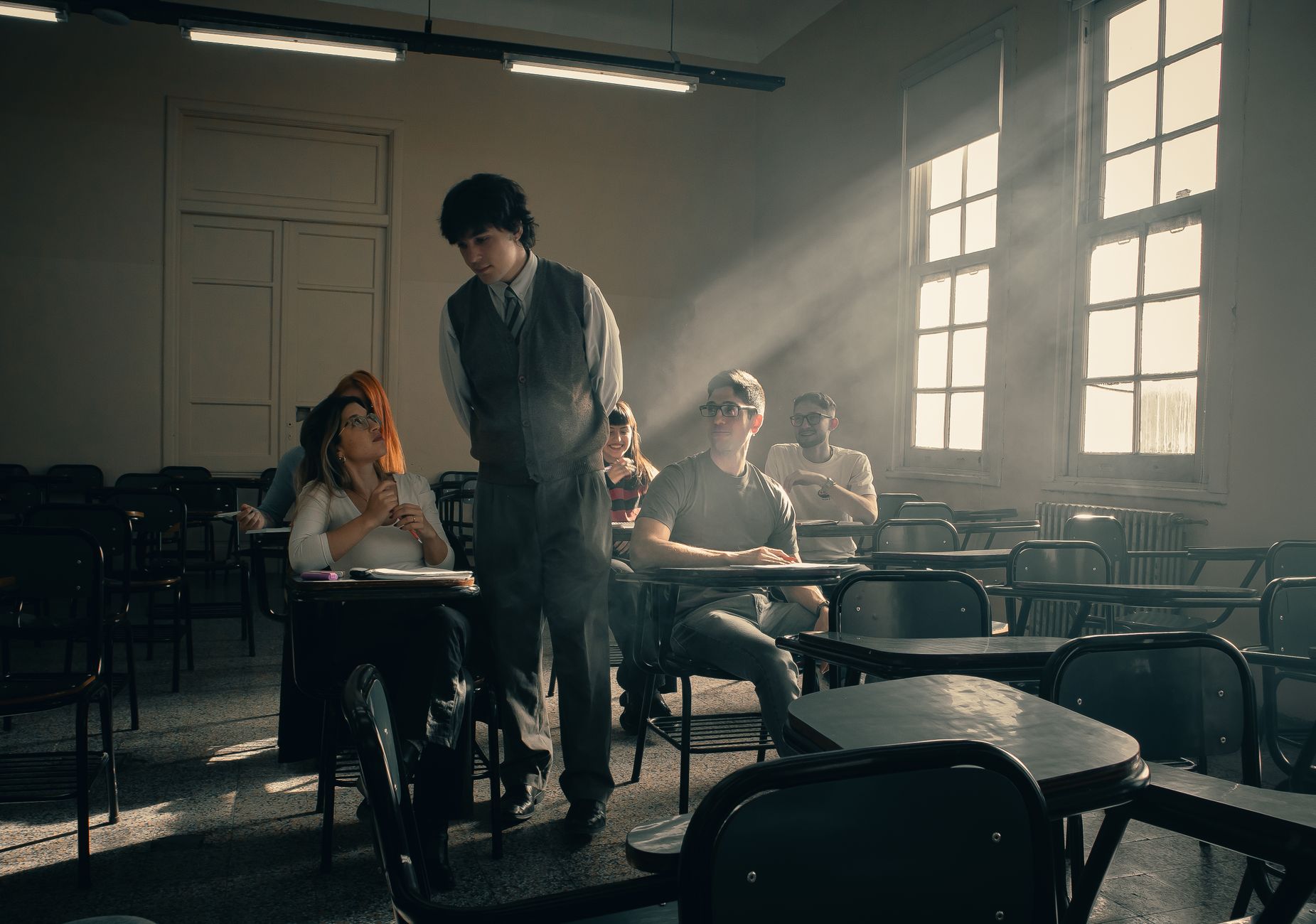
It was a Tuesday morning at Dubai's GEMS Modern Academy. Fifteen-year-old Ahmed wasn’t just typing; he was conversing with an AI. His English teacher, a seasoned professional, observed as the program offered detailed feedback on Ahmed's essay, "The Shifting Sands of Time: A Commentary on Environmental Degradation in the UAE." This wasn't about grading, but about refining thought.
The AI highlighted nuanced sentence structures, suggested alternative vocabulary, and prompted deeper critical thinking. There was no red pen, no judgment, just a persistent, patient algorithmic mentor. This wasn't the AI that promised to replace teachers; this was AI designed to amplify human potential, making complex revision an accessible, personal exchange.
Two years ago, in the nascent days of generative AI, school boards in London and Mumbai alike grappled with a singular, panicked question: How do we stop students from using AI to cheat? The initial response, driven by fear and misunderstanding, was often outright prohibition. Firewalls went up. Plagiarism detection software was updated to sniff out AI-generated text. It was a digital arms race, with educators attempting to outwit innovation. This reactionary stance, however, failed to acknowledge the fundamental shift occurring. AI was not a fad; it was a foundational technology. The classrooms that thrived were the ones that pivoted, not away from AI, but into its intelligent integration.
The truly effective integration of AI isn't about replacing the teacher, but about augmenting their reach, providing a bespoke learning pathway for every student seated in their classroom.
Personalization at Scale
Consider a classroom in Nairobi. Fifty students, each with varying learning styles, paces, and prior knowledge. A single teacher, however dedicated, struggles to provide truly individualized attention. This is where AI’s quiet revolution is most profound. Adaptive learning platforms, powered by sophisticated algorithms, can now assess a student’s understanding in real-time, tailoring subsequent exercises and content. From remedial math in a bustling Riyadh school to advanced physics concepts for a gifted student in Palo Alto, AI offers a truly personalized curriculum at a scale previously unimaginable. It’s not about removing the teacher from the equation, but about freeing them from the Sisyphean task of one-size-fits-all instruction.
Rethinking Assessment and Creativity
The most intriguing developments now focus on how AI can foster, rather than hinder, creativity and critical thinking. If an AI can draft a passable essay, perhaps the pedagogical focus should shift from drafting to refining, to critiquing, to understanding the underlying arguments and biases. In a Singaporean classroom, students use AI to generate multiple versions of a historical narrative, then critically analyze each version for its perspective and omissions. The assessment moves beyond rote memorization to a higher-order evaluation of information and its presentation. This isn't about making learning easier; it's about making it smarter, more incisive, and deeply analytical.
Our journey with AI in education is still in its early chapters. The initial anxieties have given way to a more considered, pragmatic approach. The question is no longer 'if' AI will be in our classrooms, but 'how' it will empower the next generation of thinkers, creators, and problem-solvers. The quiet hum of an algorithm, once a source of apprehension, now promises a future where every child, from the dusty plains of rural Kenya to the gleaming towers of New York City, has a personal, tireless guide on their educational odyssey.
Frequently asked
No, AI is best viewed as a tool to augment a teacher's capabilities, not to replace them. It handles repetitive tasks and offers personalized support, allowing teachers to focus on higher-order guidance and human interaction.
Initial approaches focused on detection, but the shift is towards integrating AI into assignments themselves. Students might be asked to critique AI-generated content, or use AI as a brainstorming tool, then explain their process and reasoning.
While initial adoption might see a disparity, the accessibility of AI tools is rapidly increasing. Cloud-based solutions and open-source models are making AI affordable for a wider range of educational institutions globally.
AI platforms analyze a student's performance, learning style, and pace to recommend tailored content, exercises, and feedback. This ensures each student receives instruction that best suits their individual needs, making learning more efficient and effective.
Critical thinking, ethical reasoning, digital literacy, creativity, and problem-solving are paramount. Students need to understand how AI works, its limitations, and how to use it responsibly and effectively as a tool.
One piece of writing on AI in education. Every Monday morning. From the editors of NASCA, in seven countries. No spam, unsubscribe in one click.
Bring NASCA to your school.
If this piece resonated, the next step is a conversation. A real person from our team will reply within one working day.