India's Classrooms Are Rethinking Learning
Across India, classrooms are embracing hands-on learning, replacing rote memorization with critical thinking. This pedagogical shift holds immense potential for the nation's future.
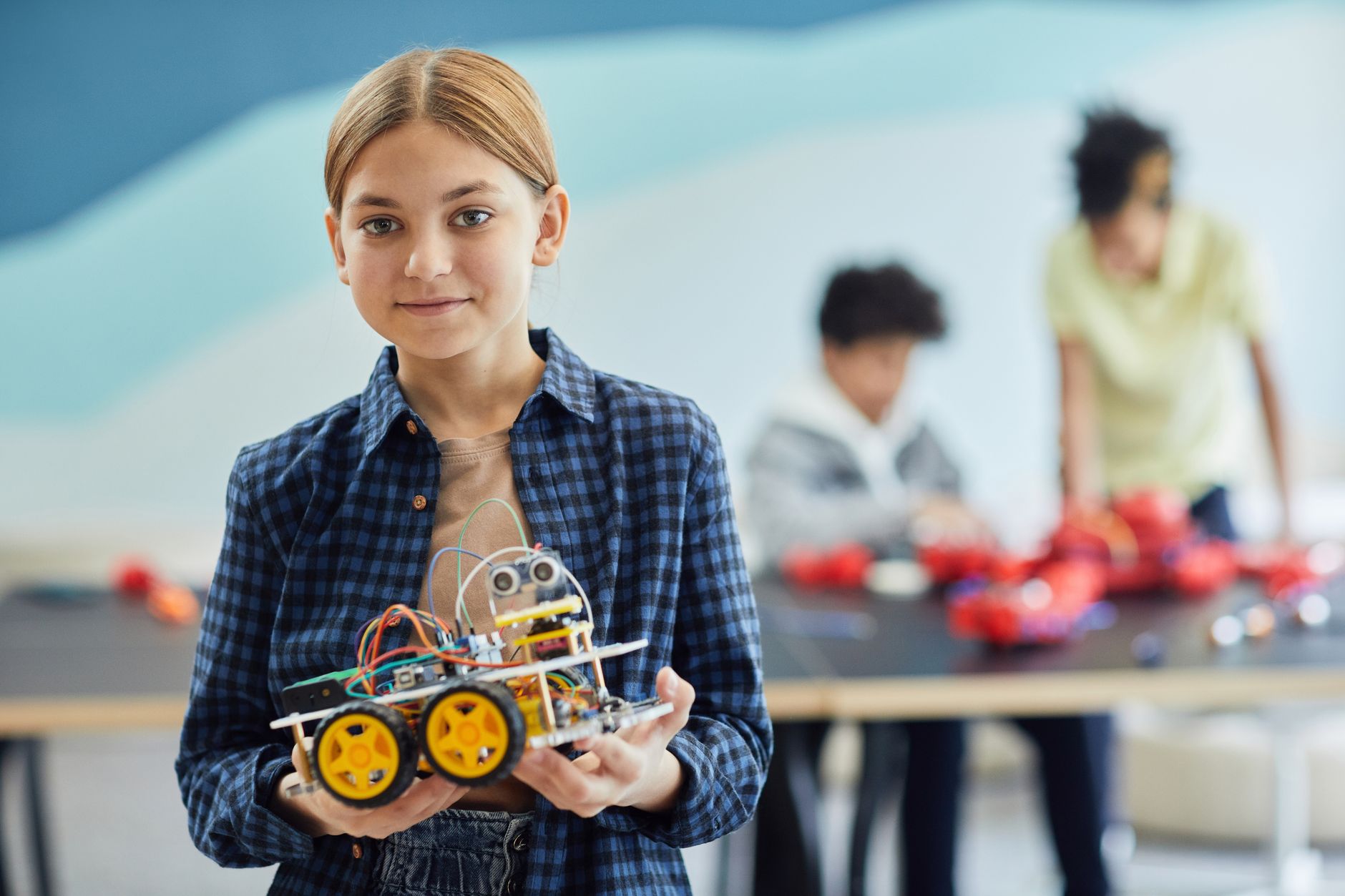
Atal Tinkering Labs, spread across thousands of schools in India, are changing how children learn. In a Chennai government school, a ten-year-old girl recently recalibrated a miniature robotic arm, designed to sort plastic from biodegradable waste. Her focused movements and problem-solving spoke to a profound shift, far from the rote memorization that once defined her parents' schooling.
From a Delhi private school where a 3D printer hums, prototyping a water filtration system, to a Bangalore university lab alive with chatter around a genetics experiment, these aren't isolated events. India, a nation of both immense promise and considerable challenges, is actively adopting a STEAM framework that goes beyond traditional science fairs, signaling a new era for its classrooms.
Beyond the Chalkboard: A New Pedagogy
The echoes of outdated methods still linger, of course. We all remember the pressure of board exams, the relentless drills. But a new philosophy is taking root. It’s a shift from the ‘what’ to the ‘how’ and ‘why’. Educators, from the bustling streets of Mumbai’s elite institutions to the more remote schools in Rajasthan, are discovering that true understanding blossoms not from memorising formulas, but from wrestling with problems.
This isn't about replacing knowledge with skills. It’s about making knowledge actionable. When a student in Uttar Pradesh designs a low-cost sensor to monitor air quality, they aren't just applying physics principles; they are engaging in civic problem-solving. When a group of students in Pune uses AI to analyze local agricultural data, they’re not just coding; they're contributing to food security.
The Digital Divide, Bridged by Ingenuity
Naturally, the digital divide looms large. Not every school has access to cutting-edge robotics labs or high-speed internet. But Indian ingenuity, a trait often underestimated, is stepping in. Simple, low-cost solutions are emerging. Think of mobile science labs reaching remote villages, or open-source software enabling sophisticated data analysis on older computers. Organizations like our own at NASCA have witnessed this firsthand, working with educators to adapt curricula, making advanced concepts accessible with readily available tools.
The future of Indian education isn’t just about elite institutions; it’s about equitable access to quality, hands-on learning for every child, regardless of their postcode.
This isn't about creating a nation of coders, but a nation of critical thinkers, innovators, and problem-solvers. It's about equipping young minds not just for future jobs, but for unforeseen futures. The complexities of climate change, resource scarcity, and global health crises demand a generation capable of adaptive, interdisciplinary thought. India, with its vast youth population, stands at a unique inflection point.
A Global Mindset, Locally Grounded
The world is watching, and for good reason. India’s approach is not merely importing Western models; it’s contextualizing them, adapting them to local realities and national aspirations. The emphasis on sustainable development goals, on indigenous knowledge systems integrated with modern science, gives this movement a distinctly Indian character. It's a pragmatic idealism, a fusion of ancient wisdom and futuristic vision.
We see it in the government's push for अटल टिंकरिंग लैब्स (Atal Tinkering Labs), providing young minds with spaces to experiment and innovate. We see it in the burgeoning start-up culture that is increasingly rooted in STEAM principles. This isn't just an educational reform; it's an economic and social revolution in the making.
Frequently asked
The core shift is from rote memorization and passive learning to active, hands-on problem-solving, critical thinking, and interdisciplinary STEAM education.
Indian ingenuity is fostering low-cost solutions like mobile science labs and open-source software, making advanced concepts accessible even in resource-limited settings.
Atal Tinkering Labs, a government initiative, provide dedicated spaces for students to experiment, innovate, and apply STEAM principles in a practical setting.
No, India is localizing and contextualizing these global STEAM models, integrating them with indigenous knowledge and national development goals, creating a distinctly Indian approach.
The vision is to cultivate a generation of critical thinkers, innovators, and problem-solvers equipped to address complex global challenges and contribute to India's economic and social revolution.
One piece of writing on AI in education. Every Monday morning. From the editors of NASCA, in seven countries. No spam, unsubscribe in one click.
Bring NASCA to your school.
If this piece resonated, the next step is a conversation. A real person from our team will reply within one working day.