
The Algorithmic Classroom: Raising Learners (Not Users) in 2026
The classroom has changed. It's not just about textbooks and whiteboards anymore. Today, algorithms shape how our children learn, interact, and even think. This piece explores the subtle shifts and bold interventions parents can make to ensure their children are active learners, not passive users, of these powerful new tools.
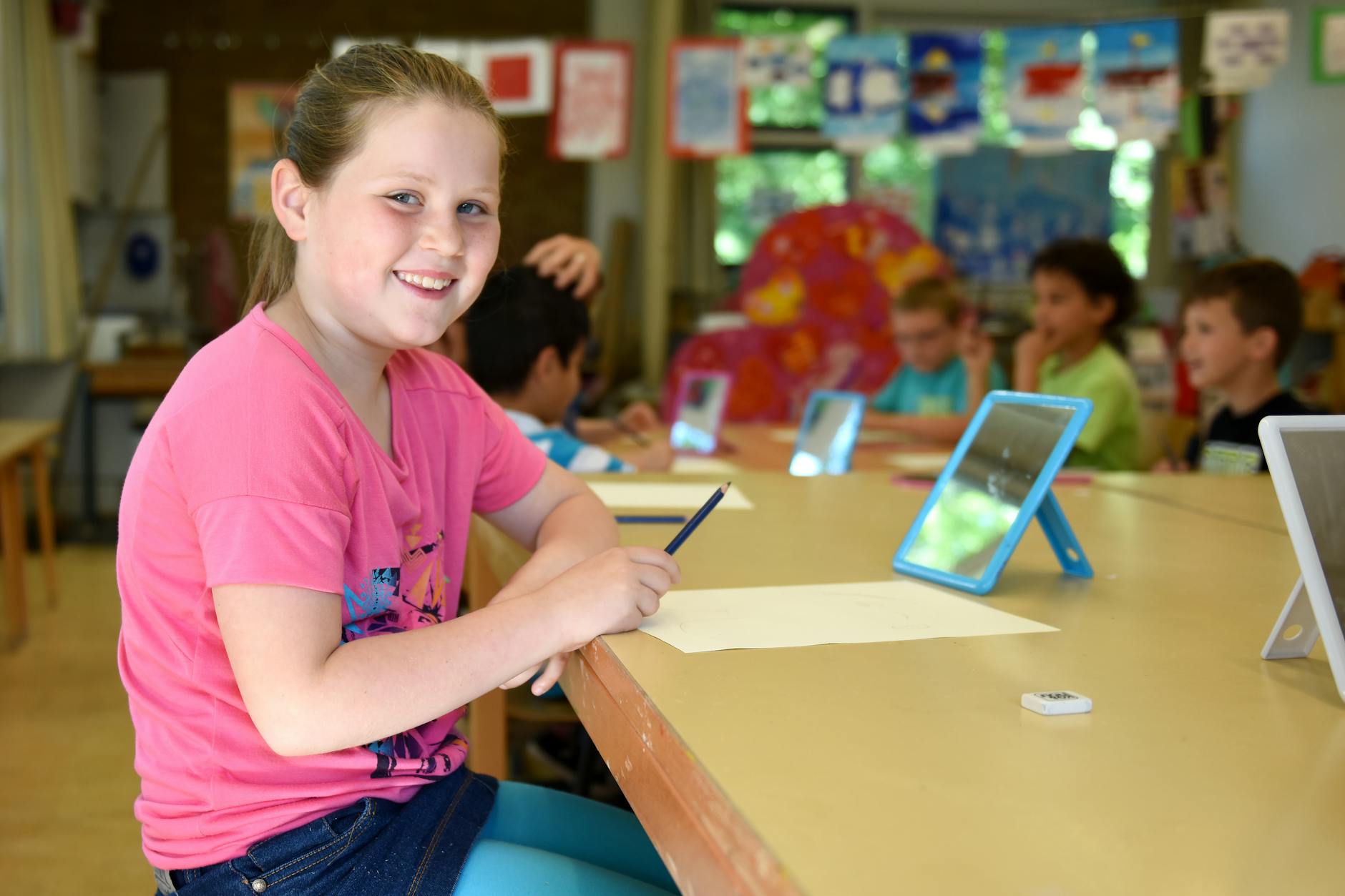
In a sun-drenched second-grade classroom in Austin, a teacher projects a problem onto the smartboard. An AI tutor, subtly integrated into the learning platform, observes each student’s response through their individual tablets, tailoring the next few questions to specific points of confusion. Across town, a high school senior in Houston, preparing for their AP Physics exam, revisits a concept with an AI chatbot, not for answers, but for new angles of inquiry, for hypotheticals the textbook never dared to ask. These aren't scenes from a distant future; they are sketches of American education in 2026, where algorithms are no longer novelties but embedded architects of learning.
Yet, this integration, while promising, carries a silent current of concern. We, as parents, stand at the frontier of a new educational landscape, one where our children are not merely using technology, but are themselves being shaped by it. The question is not if AI will be in their classrooms, but how it will interact with their developing minds. Will they become adept navigators of knowledge, or will they be molded into compliant users, their critical faculties smoothed over by the frictionless efficiency of intelligent systems?
The Invisible Hand of Personalization
The allure of personalized learning is strong. Imagine an education perfectly tailored to each child's pace, their proclivities, their moments of struggle and triumph. Algorithms promise exactly this, identifying gaps, recommending resources, and even adapting the curriculum in real-time. This can be a profound benefit, particularly for students in under-resourced districts who might otherwise be overlooked.
However, this powerful personalization comes with an unseen pedagogical hand. When an algorithm decides what a child needs to learn next, what questions to ask, or what content to present, whose pedagogy is being enacted? Is it the wisdom of seasoned educators, distilled into code, or the biases of datasets and the objectives of software developers? The risk is that children become accustomed to a learning path defined for them, rather than a path they actively forge. The serendipity of discovery, the intellectual elbow room to wander and wonder, can be subtly eroded.
Consider the subtle shift: from a child actively seeking out multiple perspectives on the Civil Rights Movement, to an algorithm curating a "balanced" set of resources. The former cultivates research skills, critical analysis, and the understanding that knowledge is constructed. The latter, while efficient, risks fostering a passive consumption of pre-digested information. Our role, then, shifts to encouraging the "why" behind the algorithm's "what."
Cultivating Creative Friction
One of the most profound dangers of an over-reliance on algorithmic learning is the erosion of what I call "creative friction." This is the productive struggle, the moments of confusion, the false starts that ultimately lead to deeper understanding and innovative solutions. Algorithms, in their quest for efficiency, often seek to smooth out these very rough edges. They correct errors instantly, suggest optimal paths, and sometimes, in their zeal, preempt the very process of genuine problem-solving.
Think of a child in a robotics club in Atlanta, trying to program a sensor to detect an obstacle. An immediate AI suggestion for the correct code might save time, but it robs the child of the iterative process of debugging, of hypothesizing and testing, of the sheer Eureka moment when the solution finally clicks. This isn't about rejecting assistance, but about understanding its optimal application. Our children need to wrestle with problems, to experience the frustration that precedes genuine insight.
Parents can foster this creative friction at home. Encourage open-ended projects that don't have a single "right" answer. Ask them to explain how they arrived at a solution, not just what the solution is. Perhaps most importantly, model intellectual curiosity yourself. Show them that even adults don't always have instant answers, and that the search for understanding is a valuable endeavor in itself.
Beyond the Screen: The Analog Advantage
While AI reshapes the digital classroom, we must not forget the enduring power of the analog world. The tactile experience of building a model volcano for a science fair in Chicago, the collaborative chaos of a group project designing a sustainable community garden in Seattle, the nuanced give-and-take of a debate club in Philadelphia, these experiences cultivate skills that no algorithm, however sophisticated, can replicate.
These are the spaces where empathy is honed, where leadership emerges organically, and where the messiness of human collaboration teaches lessons far beyond any curriculum. Our children need unstructured play, face-to-face conversations, and opportunities to engage with the physical world. These aren't distractions from an AI-driven future; they are essential complements, grounding experiences that build resilience, creativity, and genuinely human intelligence.
In essence, we are raising citizens of a world increasingly mediated by intelligence systems. Our task as parents is not to shield them from this reality, but to equip them to master it. This means fostering critical thought, celebrating the process of inquiry, and championing the irreplaceable value of human connection. We aim for learners who can discern, create, and question, not merely users who consume and comply. The future of American education, and indeed, the texture of their adult lives, hinges on this distinction.
FAQ
Q: Is AI in the classroom inherently bad for my child?
A: Not at all. AI tools, when used thoughtfully, can offer powerful personalization and access to resources. The concern arises when children become passive consumers of AI-delivered content rather than active participants in their learning journey. It's about how AI is used, not if it is used.
Q: How can I tell if my child is becoming too reliant on AI for answers?
A: Look for signs that they're struggling with basic problem-solving without immediate digital assistance, or if they struggle to articulate their thought process. Encourage explanations of how they arrived at an answer, not just the answer itself. If they consistently defer to an AI for complex tasks they could tackle themselves, it might be an issue.
Q: Should I limit my child's screen time if their school uses a lot of AI tools?
A: Screen time is a complex issue. The quality of screen time matters more than simply the quantity. Rather than a blanket ban, focus on balancing screen time with offline activities, encouraging interactive and creative digital engagement over passive consumption, and ensuring the content is age-appropriate and supports learning objectives.
Q: My child's teacher is enthusiastic about AI. How can I discuss my concerns without seeming unsupportive?
A: Approach the conversation from a place of curiosity and collaboration. Ask about the teacher's pedagogical goals for using AI, what skills they aim to cultivate, and how they ensure students remain critical thinkers. Frame your questions around specific learning outcomes and the development of deeper understanding, rather than outright criticism of the technology itself.
Q: What practical things can I do at home to complement AI-driven learning?
A: Encourage reading physical books, engage in hands-on projects (cooking, building, gardening), promote open-ended discussions about complex topics, and prioritize unstructured playtime. These activities foster creativity, critical thinking, and social-emotional skills that are vital alongside digital literacy.
Editor's note, Revisited September 2026. The core argument here still holds; the schools we work with continue to report the same patterns.
Frequently asked
Not at all. AI tools, when used thoughtfully, can offer powerful personalization and access to resources. The concern arises when children become passive consumers of AI-delivered content rather than active participants in their learning journey. It's about *how* AI is used, not *if* it is used.
Look for signs that they're struggling with basic problem-solving without immediate digital assistance, or if they struggle to articulate their thought process. Encourage explanations of *how* they arrived at an answer, not just the answer itself. If they consistently defer to an AI for complex tasks they could tackle themselves, it might be an issue.
Screen time is a complex issue. The quality of screen time matters more than simply the quantity. Rather than a blanket ban, focus on balancing screen time with offline activities, encouraging interactive and creative digital engagement over passive consumption, and ensuring the content is age-appropriate and supports learning objectives.
Approach the conversation from a place of curiosity and collaboration. Ask about the teacher's pedagogical goals for using AI, what skills they aim to cultivate, and how they ensure students remain critical thinkers. Frame your questions around specific learning outcomes and the development of deeper understanding, rather than outright criticism of the technology itself.
Encourage reading physical books, engage in hands-on projects (cooking, building, gardening), promote open-ended discussions about complex topics, and prioritize unstructured playtime. These activities foster creativity, critical thinking, and social-emotional skills that are vital alongside digital literacy.
One piece of writing on AI in education. Every Monday morning. From the editors of NASCA, in seven countries. No spam, unsubscribe in one click.
Bring NASCA to your school.
If this piece resonated, the next step is a conversation. A real person from our team will reply within one working day.