Beyond the Screen: AI’s Real Classroom Impact
We often hear of AI as a disembodied force, a distant algorithm. But in classrooms from Dubai to Adelaide, AI is already a tangible presence, reshaping how we learn and teach.
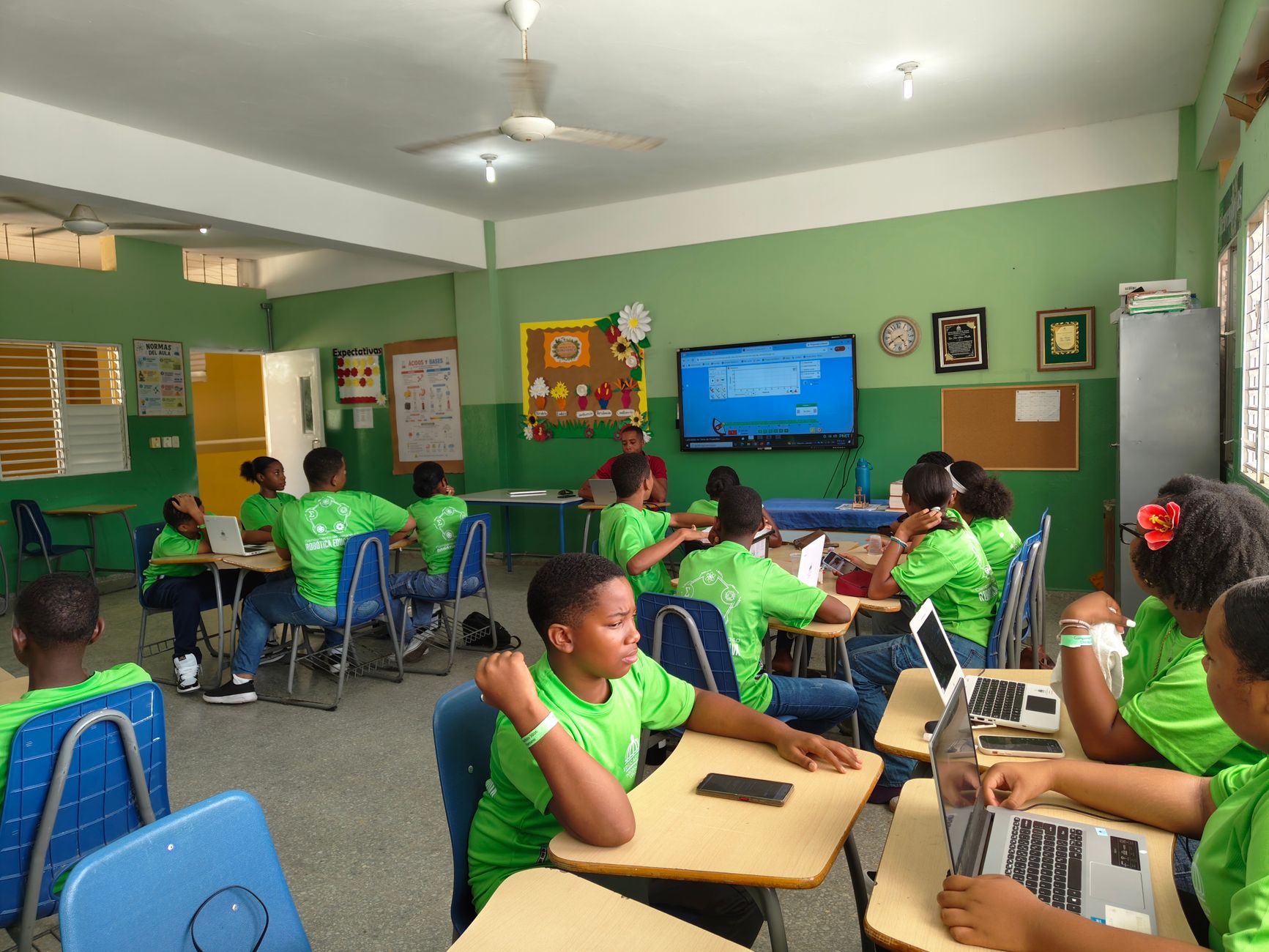
In a bustling classroom in Mumbai last spring, a young student named Rohan struggled with algebra. For weeks, the concepts of quadratic equations felt like a foreign language. His teacher, Ms. Sharma, tried various approaches, but the class size meant individual attention was a luxury. Then, she introduced an adaptive AI tutor. Rohan, initially skeptical, found himself engaging with problems tailored precisely to his stumbling points. The system didn't just correct; it explained, rephrased, and presented concepts in new ways until a small, delighted "Ah!" escaped his lips. That moment, replicated across countless subjects and continents, illustrates AI's true purpose in education: not to replace, but to refine the human act of learning.
We often hear of AI as a disembodied force, a distant algorithm. But in classrooms from Dubai to Adelaide, AI is already a tangible presence, reshaping how we learn and teach. This isn't about futuristic visions; it's about present realities. We see it in personalized learning paths, in the automation of administrative tasks, and in the rich data that helps educators understand their students more profoundly than ever before. The future of learning is not about machines teaching children, but about machines making human teachers better, and children more engaged.
The Quiet Revolution of Personalization
Consider the traditional classroom. A single teacher, a varied group of thirty students, each with unique learning styles, paces, and prior knowledge. Providing genuinely personalized instruction is a Herculean task. Here, AI acts as an invaluable ally. Adaptive learning platforms, powered by AI, observe student interactions, identify patterns of understanding and misunderstanding, and then dynamically adjust the material. For the aspiring mathematician, it might offer more complex proofs. For the budding writer, it could suggest different rhetorical devices to explore. This kind of nuanced attention, once available only in one-on-one tutoring, is now scalable. It ensures that no child is left behind because the curriculum moved too fast, and no gifted student is held back because the pace is too slow. Our work at NASCA, observing these systems in action across diverse settings, consistently shows students exhibiting greater confidence and deeper conceptual understanding when their learning journey feels truly their own.
The future of learning is not about machines teaching children, but about machines making human teachers better, and children more engaged.
This immediate feedback loop is crucial. When Rohan made a mistake in Mumbai, the AI didn't just mark it wrong. It offered a hint, a step-by-step breakdown, or even a different example. This prevents frustration and reinforces correct understanding immediately. It's the difference between guessing and truly learning. This continuous dialogue with the material builds resilience and encourages a growth mindset. Students learn that errors are not failures, but opportunities for targeted improvement.
Reclaiming the Teacher’s Time
Teaching is a demanding profession. Beyond delivering lessons, educators spend countless hours on grading, administrative duties, and lesson planning. These tasks, while necessary, can detract from the precious time available for direct student interaction. AI offers a pragmatic solution. Automated grading for objective assessments, essay feedback tools that highlight grammatical errors and suggest structural improvements, and AI-powered lesson plan generators can significantly reduce this burden. Imagine a teacher in a school in London, no longer spending her evenings meticulously marking multiple-choice papers, but instead dedicating that time to preparing an engaging project or providing one-on-one mentorship. This isn't about replacing the human element of assessment; it's about offloading the repetitive, time-consuming parts so that teachers can focus on the qualitative, empathetic aspects that only a human can provide. It gives them space to be mentors, inspirers, and guides, rather than just administrators of knowledge.
A Global Tapestry of Learning Opportunities
From the busy classrooms of Singapore to the quiet study corners in Saudi Arabia, AI is democratizing access to quality education. It breaks down geographical barriers, making advanced learning resources available even in remote areas. A student in a rural Australian school might access specialized AI modules in astrophysics that were once exclusive to urban universities. This global reach means that the quality of education a child receives is less dependent on their postcode or socioeconomic status. It fosters a more equitable landscape, where curiosity, not circumstance, becomes the primary determinant of learning opportunity. This expansion of access is one of the most exciting prospects of AI in education, promising a richer, more diverse pool of talent and innovation for the world.
Ultimately, AI in education is not about building a cold, technological learning environment. It is about enhancing the warmth and effectiveness of human instruction. It is about creating conditions where every student, regardless of their starting point, has the tools and tailored support to thrive. It allows teachers to teach more effectively, focusing on the art of pedagogy rather than the mechanics of administration. We are not just building better students; we are building a more thoughtful, more capable, and more connected generation, ready to shape the future with confidence and creativity.
Frequently asked
No, AI is designed to augment teachers, not replace them. It handles repetitive tasks and provides data-driven insights, allowing teachers to focus on complex teaching, mentorship, and empathetic guidance.
AI platforms analyze a student's performance, learning style, and pace. They then adapt the curriculum, exercises, and explanations in real-time, offering customized content and feedback tailored to individual needs.
Not at all. AI is being used across all subjects, from foundational literacy and numeracy to complex sciences and humanities, adapting to a wide range of learning levels and needs.
Schools gain improved student engagement and outcomes through personalized learning, increased teacher efficiency by automating administrative tasks, and broader access to high-quality educational resources.
By making advanced and personalized learning resources accessible globally, AI can help bridge gaps caused by geographical location or socioeconomic status, providing equitable learning opportunities to more students.
One piece of writing on AI in education. Every Monday morning. From the editors of NASCA, in seven countries. No spam, unsubscribe in one click.
Bring NASCA to your school.
If this piece resonated, the next step is a conversation. A real person from our team will reply within one working day.