AI Storytelling: Nurturing Tomorrow's Minds
AI is not just for coding. It is a new canvas for children to tell stories, to build worlds, and to see their imaginations take tangible form. Discover how AI tools can deepen creativity and critical thinking in your child.
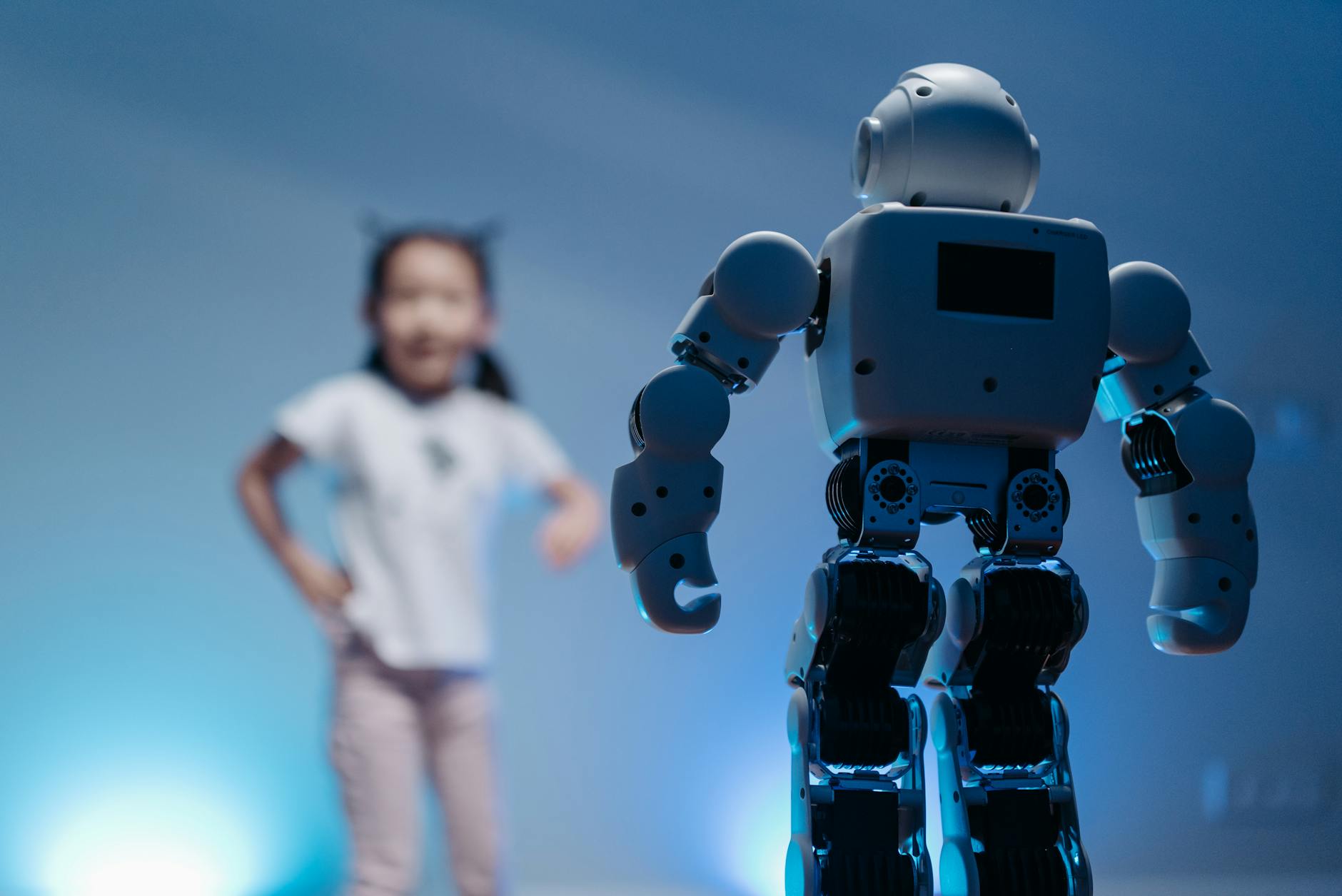
In a sun-drenched kindergarten classroom in Palo Alto, California, five-year-old Maya sits before a tablet. She is not playing a pre-programmed game. Instead, she is describing a world where clouds are made of cotton candy and unicorns have iridescent wings. As she speaks, an AI art generator renders her descriptions into vivid images, then stitches them into a short animated sequence. The joy on her face, and the faces of her classmates, is palpable. They are not merely consuming stories, they are creating them, with AI as their tireless co-conspirator.
This scene, once science fiction, is becoming a quiet reality in homes and schools across the United States. We see a common misconception that AI in education means complex coding or abstract data science. While those fields are vital, we find AI’s most immediate and profound impact on young minds lies in its capacity for creative expression. Specifically, AI-powered storytelling tools offer a unique avenue for children to explore language, narrative structure, and visual design in ways previously unimaginable.
The New Canvas for Imagination
For generations, children have drawn pictures and told tales. These are fundamental human activities, essential for cognitive and emotional development. AI does not replace these actions. It expands them. Imagine a child dictating a story about a dragon who loves to bake cakes. An AI can transcribe their words, refine the prose slightly for readability, and then generate images of this cake-baking dragon in a bustling kitchen. The child, witnessing their words manifest visually and audibly, gains a deeper understanding of cause and effect in narrative, and the power of their own ideas.
This process encourages iterative refinement. A child might say, "The dragon has red scales," see the image, and then declare, "No, not red, emerald green!" The immediate feedback loop, made possible by AI, fosters critical thinking and decision-making. It teaches them that creativity is not a single flash of inspiration, but a series of choices, each shaping the final piece. We have seen this spark curiosity, prompting children to experiment with different descriptive words, varied plot points, and alternative character traits.
Language, Structure, and Visual Literacy
Storytelling with AI is an immersion in language arts. Children learn vocabulary as they search for the right words to describe their characters and settings. They grasp sentence structure more intuitively when they see how different phrasing impacts an AI’s interpretation. Moreover, these tools often provide opportunities to explore different narrative arcs. Perhaps the AI suggests a "hero's journey" template, or prompts for a conflict and resolution. This scaffolding helps young writers understand the bones of a story, without feeling constrained by rigid rules.
Beyond words, there is the visual component. Children become directors, guiding the AI on character appearances, scene compositions, and even emotional expressions. This develops visual literacy, an increasingly vital skill in our image-rich world. They learn about color palettes, perspective, and how visual elements convey mood and meaning. It is a holistic approach to creativity, blending linguistic prowess with artistic direction.
"The most powerful aspect of AI storytelling is its ability to lower the barrier to creation. Children who might struggle with drawing or writing can now see their visions realized, fostering a sense of accomplishment and encouraging further exploration."
Consider a shy child in a Denver classroom, hesitant to share their written stories. With AI, they can quietly build their world, refining it until they feel confident. The AI offers a non-judgmental space for practice and experimentation. Then, when they are ready, they can share their finished, visually rich story, often with newfound confidence.
Cultivating Future Innovators
The skills honed through AI storytelling extend far beyond creative writing. Children learn to articulate complex ideas clearly and concisely, a foundational skill for any academic or professional pursuit. They develop problem-solving abilities as they troubleshoot why an AI did not interpret their prompt as expected. They gain familiarity with emerging technologies in a playful, accessible manner, demystifying AI and positioning it as a tool for human ingenuity, not a replacement.
We see children in suburban homes outside Chicago designing characters, then asking the AI to predict how those characters might react in different scenarios. This encourages empathy and understanding of complex motivations. They are not just creating stories; they are building empathy machines and psychological playgrounds. This interaction lays the groundwork for computational thinking without explicit coding lessons. It is about breaking down a complex creative task into smaller, manageable instructions for a machine, and understanding how those instructions translate into an outcome.
AI storytelling is more than a novel educational trend. It is a profound shift in how children can engage with their own imaginations. It offers a bridge between abstract thought and tangible creation, between spoken word and visual spectacle. In this nascent field, children are not just users. They are pioneers, shaping the very landscape of future creativity.
Frequently asked
Many AI storytelling tools are designed with intuitive interfaces suitable for children as young as five or six, especially those focused on image generation or simple narrative prompts. More advanced tools can engage pre-teens and teenagers.
Not at all. AI storytelling tools complement traditional methods by providing a new avenue for creative expression and engagement. They can motivate children to read more to gather ideas and write more to articulate their visions, enhancing foundational literacy skills.
Parents should choose age-appropriate platforms with clear privacy policies and content filters. Supervising children during use, discussing ethical AI principles, and emphasizing that AI is a tool, not a sentient being, are crucial steps.
The goal is to use AI as a collaborator, not a crutch. Encourage children to start with their own ideas, and use AI to enhance or visualize them. Balancing AI creation with traditional creative outlets like drawing, writing by hand, and imaginative play is important for well-rounded development.
Start with simple prompts: ask your child to describe their favorite animal and generate an image, then build a short story around it. Explore tools that allow for voice input to minimize typing barriers. Focus on fun and experimentation over perfection, letting your child lead the creative process.
One piece of writing on AI in education. Every Monday morning. From the editors of NASCA, in seven countries. No spam, unsubscribe in one click.
Bring NASCA to your school.
If this piece resonated, the next step is a conversation. A real person from our team will reply within one working day.