The Architecture of Next-Generation Career Paths
Static job titles are giving way to capability clusters. In 2026, the most resilient career paths belong to students who bridge physical engineering, algorithmic auditing, and civic judgment.
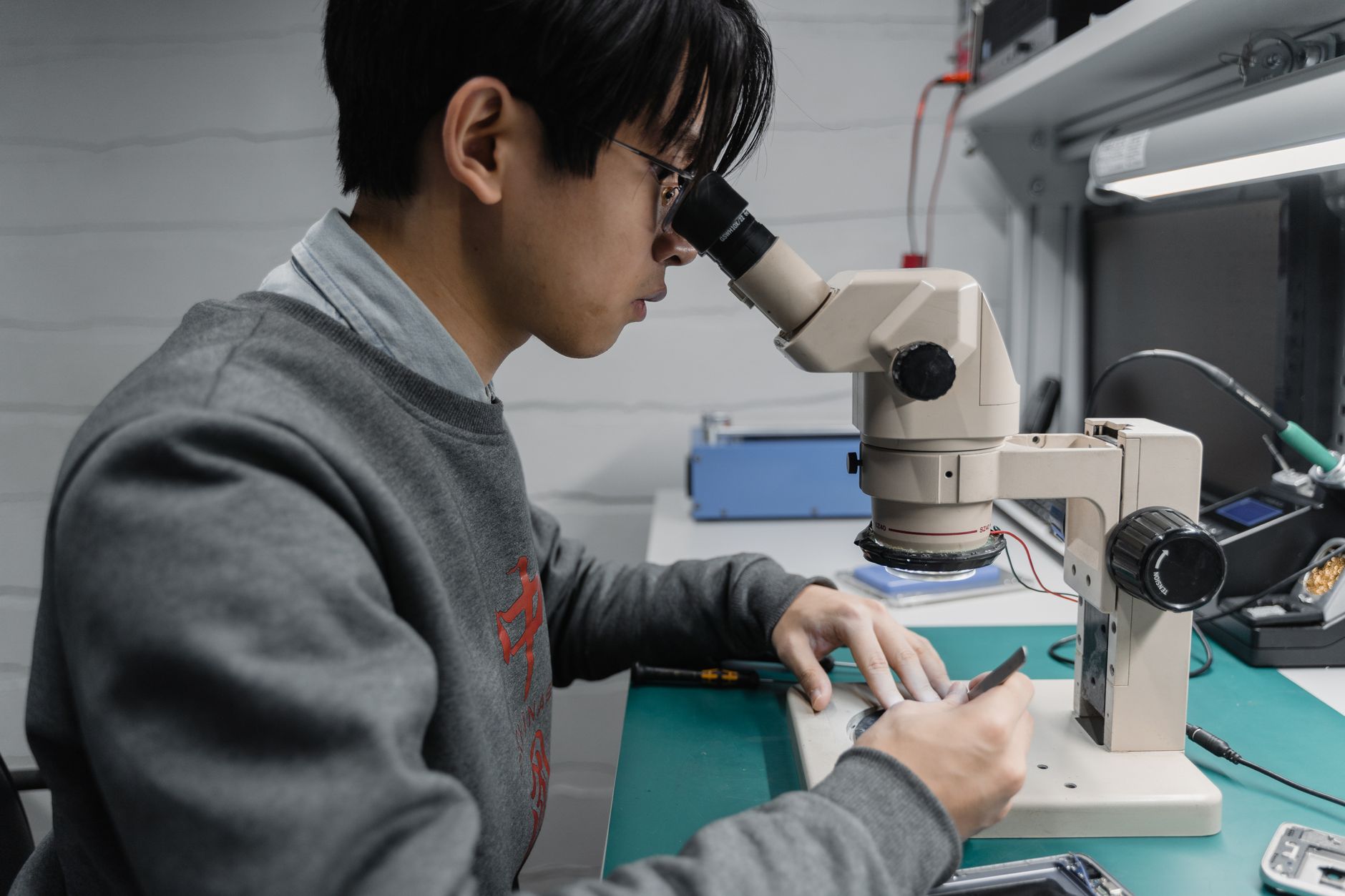
At seven on a Tuesday morning in Jurong East, a seventeen-year-old named Mei adjusts an acoustic sensor clipped to an urban water main. Her terminal runs a locally hosted neural net that translates micro-vibrations into leak probabilities. Across the room, her classmate balances a cost model for the municipal council. Neither Mei nor her partner holds an engineering degree yet. Both are completing a secondary school practicum that resembles a junior residency.
A decade ago, career advisory offices handed out lists of job titles. Guidance counselors matched students to static buckets like civil engineer, statistician, or graphic designer. Those buckets assume that tools remain stable long enough for an undergraduate syllabus to outlast its tuition bill. By late 2026, the toolchain renews itself every two quarters.
What replaces the vocational catalog is something richer. We are watching the arrival of capability clusters, where young people assemble portfolios of proof around real physical systems. The prize belongs to the generalist who builds deep roots in two disparate crafts.
The twilight of the single-discipline funnel
The traditional pipeline assumed a linear staircase. A teenager chose a discipline at sixteen, refined it at university, and spent thirty years polishing that specialty inside a predictable corporate ladder.
Today, automated code generation and synthetic data pipelines handle introductory computation. The baseline work of drafting, syntax checking, and basic structural calculation now belongs to background software. Because basic tasks happen instantly, the market values students who orchestrate complex systems across messy human environments.
A water engineer in Singapore must read spatial datasets, calibrate embedded hardware, and negotiate with neighborhood committees. The technical skill matters, yet its value multiplies only when stitched to human judgment.
The most resilient career path is no longer a straight highway. It is an archipelago of working experiments.
In our work across learning labs from Dubai to Melbourne, we observe that students thrive when they treat their secondary years as an R&D studio. They collect competencies rather than certificates. They learn to audit autonomous agents, verify training corpora, and anchor computational inferences to physical materials like concrete, soil, and copper wire.
Hybrid vocations taking root
Three distinct professional patterns are forming among the cohort graduating into the late 2020s.
First is the physical-system auditor. As autonomous models take custody of traffic signals, power distribution grids, and logistics bays, cities need practitioners who understand both mathematical reasoning and physical tolerances. In Riyadh and Houston, energy operators actively seek recruits who can inspect a pipeline physically while challenging the diagnostic conclusions of a vision model. These professionals combine boots on wet gravel with fluency in neural network bias.
Second is the vernacular computational architect. These are designers who understand local ecology and community history as thoroughly as they understand parametric software. In Bangalore, we recently watched students train lightweight vision models on native flora to optimize rainwater capture on heritage masonry. They are landscape architects, ethnographers, and data scientists simultaneously.
Third is the algorithmic ethicist with field authority. Regulatory boards across London and Washington have discovered that theoretical philosophy helps very little when an insurance allocation algorithm goes awry. The individuals guiding policy are former lab builders, people who spent their youth tuning models and observing their unintended ripple effects in school lunch programs or sports leagues.
Building the studio resume
How do schools foster this readiness without overloading fourteen-year-olds? The answer lies in shifting assessment from timed recall to sustained artifacts.
When a teenager spends eight months designing an autonomous drone to monitor canopy health in an urban park, they encounter every facet of modern work. They manage battery weight constraints. They write firmware. They submit permits to civil aviation authorities. They present findings to city arborists.
That project generates a living dossier. A portfolio of verified builds communicates capability far more clearly than a standardized test score ever could. Recruiters at research consortia and industrial labs already read GitHub repositories and field logs ahead of diplomas.
Schools that thrive organize their timetables around studio blocks. They clear away fragmented forty-minute periods to give students four unbroken hours with oscilloscopes, cloud environments, and raw materials. Teachers step into the posture of senior partners in an architectural atelier, critiquing drafts and showing how to troubleshoot unexpected edge cases.
The human advantage remains physical
Machine intelligence processes language and symbols with astonishing grace. Yet the world remains stubbornly physical. It leaks, rusts, overheats, and behaves unpredictably in high humidity.
Careers that flourish over the next twenty years will rest on the boundary where algorithms touch physical matter and civic life. The learner who knows how to calibrate a sensor in freezing rain, interpret the output with mathematical maturity, and explain the consequences to a skeptical city board holds a durable craft.
We see this confidence blossoming in young people who are encouraged to get their hands dirty early. They view artificial intelligence as an extraordinarily capable junior apprentice, one that drafts calculations while they direct the design, verify the physics, and assume responsibility for the outcome.
The trajectory of a modern vocation is determined by the boldness of the questions a student learns to ask of the physical world. When education treats young people as capable investigators rather than passive recipients of stale taxonomies, their professional futures take care of themselves.
Frequently asked
Static job descriptions quickly become outdated as autonomous software handles basic computation. Capability clusters, such as embedded systems design combined with civic policy, allow students to adapt their craft across multiple industries over decades.
Admissions tutors and lab directors increasingly evaluate working repositories, project documentation, physical prototypes, and field research logs that provide transparent proof of applied problem-solving.
Schools replace fragmented lecture periods with extended studio sessions, allowing students to design, test, and troubleshoot complex systems in partnership with civic organizations and local industry.
Technical depth remains essential, but its value multiplies when combined with field craft, ethical reasoning, and the ability to test digital models against messy physical realities.
One piece of writing on AI in education. Every Monday morning. From the editors of NASCA, in seven countries. No spam, unsubscribe in one click.
Bring NASCA to your school.
If this piece resonated, the next step is a conversation. A real person from our team will reply within one working day.