Beyond the Prompt Box: How Classrooms in 2026 Master the Art of Inquiry
By late 2026, schools treat neural models as instruments of active inquiry rather than search boxes, shifting classroom focus from passive answers to deep verification.
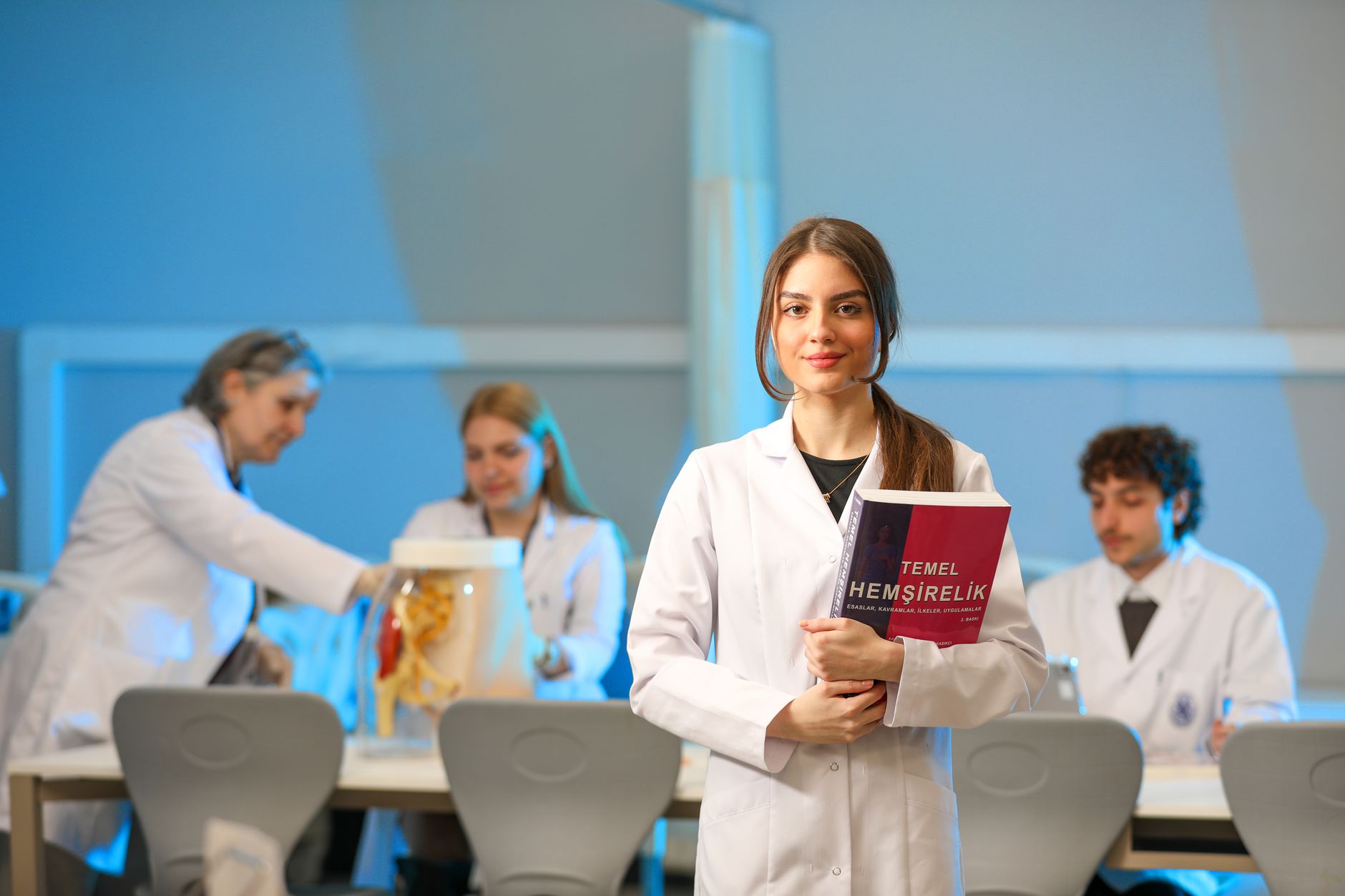
A glass-walled science studio in central Singapore overlooks wet rain-trees on a Tuesday morning. Eleven children, twelve years old, cluster around a shared bench where a local neural model visualises acoustic ripples in seawater. The sound file comes from an open hydrophone buoy anchored near Raffles Lighthouse.
One student moves a slider that adjusts marine salinity. Another tweaks water temperature by half a degree. The model shifts instantly, refolding its visual waveforms into sharp amber ridges on a tactile screen.
The teacher stands two paces back, listening. She watches how their questions evolve as the computation runs.
This scene looks quiet, almost pastoral. Yet it marks a quiet arrival in global education. By late 2026, the question of whether neural systems belong near young minds has settled into everyday habit. Classrooms from Dubai to Melbourne treat generative tools as common laboratory glass: clear, resilient, and made for direct inspection.
The disappearance of the prompt box
Two years ago, schools treated artificial intelligence as a search bar with manners. Students typed sentences into empty rectangular boxes, waited for synthetic paragraphs, and copied the results into slide decks.
That phase passed quickly.
Today, purposeful classrooms replace chat interfaces with active instruments. At a secondary academy in Leeds, students learn genetics through an interactive gene-expression map tuned by continuous neural updates. The tool does not write essays about transcription factors. Instead, it invites learners to alter nucleotide sequences and observe synthetic protein folds in real-time space.
When intelligence moves from text prediction to direct simulation, children stop behaving like passive spectators. They become investigators who treat software as an extension of their senses.
The most fruitful computation in a classroom is the kind that refuses to hand over conclusions, choosing instead to reveal mechanics.
We observe this shift across our partner campuses worldwide. When software displays the intermediate steps of its reasoning, learners develop an appetite for structural thinking. They notice where models drift, where assumptions tighten, and how mathematical constraints shape physical outcomes.
Why teachers gain more ground
A recurring anxiety used to echo through school board meetings: if synthetic tools solve homework problems in seconds, what remains for the classroom teacher?
The answer, visible in classrooms from Hyderabad to Boston, is delightful. Teachers gain the most precious resource a school can provide: room for genuine dialogue.
Consider a mathematics seminar in Riyadh. A diagnostic model quietly clusters students based on the specific geometric misconceptions they held twenty minutes earlier. The teacher sees these patterns on a quiet wrist display. Instead of lecturing to thirty students at a median pace, he pulls four chairs together.
He sits with three teenagers who struggle to grasp how non-Euclidean angles bend across spherical surfaces. He brings out wooden globes and chalk. He speaks to their precise confusion with humor and patient metaphors.
Computation handles the repetitive diagnosis. The human educator provides the empathy, the timing, and the sudden spark of insight that makes an idea take root for life.
The rise of local intelligence
For years, school technology remained tethered to server farms thousands of leagues away. That geography created understandable hesitation among principals regarding privacy, latency, and cultural nuance.
The current generation of lightweight, on-premises models changes the entire equation. Schools run their own instances directly on small desktop units housed inside their media centres.
In a bilingual primary school outside Sydney, a miniature language model runs entirely on local silicon. It draws vocabulary from regional marine ecology and First Nations seasonal calendars. Children speak into its microphones, and the system reflects their local idiom with warmth and phonetic accuracy.
Data stays within the room. Electricity requirements drop to the level of an ordinary reading lamp. The classroom regains autonomy over its technological environment, anchoring synthetic tools inside its own cultural soil.
Cultivating the habit of verification
The greatest gift modern computational tools bring to young learners is a rigorous appetite for verification.
Because models generate plausible variations with ease, children learn early to ask better questions. They compare model outputs against physical sensors, historical archives, and peer experiments.
In one of our collaborative physics sessions, students measured the terminal velocity of paper cones falling through a two-metre acrylic column. They contrasted their stopwatch numbers against the predictions of three distinct aerodynamic models.
When the real cones dropped slower than the models predicted, the room buzzed with excitement. The students discovered that air turbulence inside the closed tube created an unexpected cushion. They found the boundary where theoretical computation met physical friction.
That gap between expectation and reality is where true science lives. Neural tools make that gap visible every day, turning skepticism into an active craft.
When we invite intelligence into the classroom as an instrument of inquiry, we give students something far richer than instant answers. We offer them the confidence to look deeply into complex systems, see how they operate, and shape them toward noble ends.
Frequently asked
Modern educational systems run small, efficient models on local classroom hardware, ensuring learner data never leaves school grounds while eliminating recurring subscription fees.
Rather than writing essays for students, contemporary tools act as interactive simulators for disciplines like genetics, geometry, and fluid dynamics, requiring active hypothesis testing.
Teachers use diagnostic insights to pinpoint specific conceptual hurdles, allowing them to lead intimate, targeted discussions while computation handles routine practice tasks.
One piece of writing on AI in education. Every Monday morning. From the editors of NASCA, in seven countries. No spam, unsubscribe in one click.
Bring NASCA to your school.
If this piece resonated, the next step is a conversation. A real person from our team will reply within one working day.