The Desert as Design Brief: Place-Based STEAM in the Emirates
In classrooms from Al Ain to Ras Al Khaimah, students are replacing boxed robotics kits with solar harvesters, falaj digital twins, and edge AI tuned to harsh desert light.
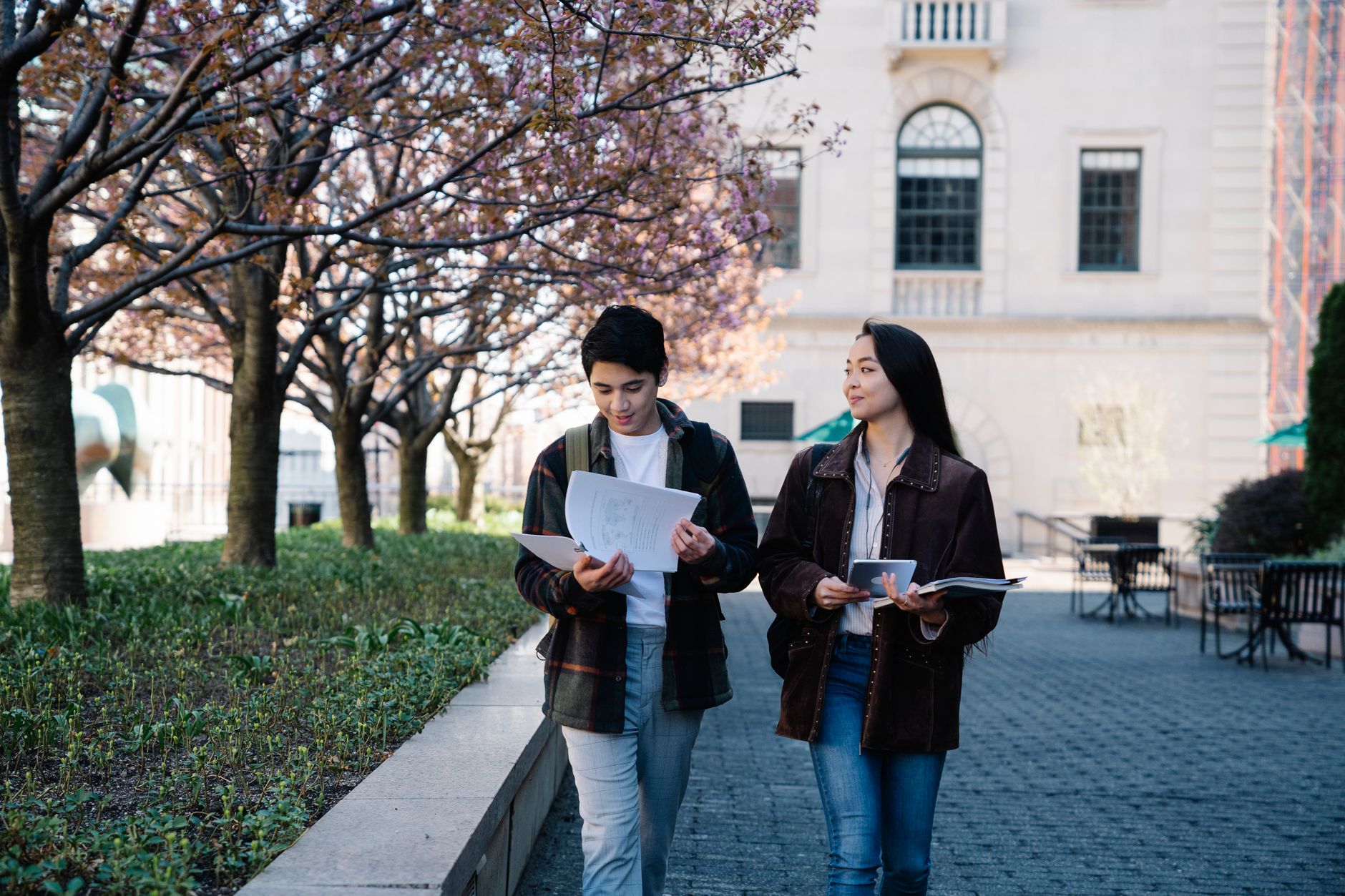
A quiet hum fills the courtyard of a community school in Al Ain just after midday. The October heat still clings to the lime-washed walls, yet beneath a canopy of date-palm netting, four twelve-year-olds are calibrating a solar-powered atmospheric water harvester. Their rig looks improvised, assembled from laser-cut recycled acrylic, Peltier cooling tiles, and an edge-computing board running a local neural network. The device samples ambient humidity, adjusts its condensation surface by half a millimeter against shifting thermal drafts, and drips clear water into an optical sensor.
Each droplet registers as a pulse of light. The screen records the volume, logs the mineral baseline, and refines the condensation model for the afternoon ahead.
This is what STEAM looks like when stripped of plastic kits and imported competition prompts. It looks like children working directly with the elements of their home ground.
Beyond the imported challenge
For years, regional classrooms imported robotics challenges designed around fictional factories or miniature football pitches. Those kits taught dexterity and basic programming logic. They also kept learners at arm's length from their immediate geography.
When UAE schools anchor technical investigation to arid hydrology, architecture, and regional biology, everything deepens. The desert stops being a backdrop and becomes the design brief. Learners who spend two terms measuring groundwater salinity along the Liwa crescent understand fluid dynamics with an immediacy no pre-packaged workbook can supply.
At NASCA, our mentors in Dubai and Sharjah watch students swap prefabricated plastic chassis for locally milled timber and clay composite shells. The materials demand real calculation. They force a young builder to account for thermal expansion, sand ingress, and solar degradation. Engineering turns tactile.
The living archive of the falaj
Consider an afternoon project underway across several schools in Ras Al Khaimah. Students are rebuilding digital twins of ancient aflaj, the gravity-fed irrigation channels that sustained desert agriculture for millennia.
The brief sounds deceptively simple. Map the gradient of an existing dry run, simulate seasonal aquifer pressure using open satellite radar data, and build an automated flow gate that balances date-palm hydration with domestic storage.
"When an eighth-grader programs an irrigation gate, she balances mathematics, municipal history, and hydrological ethics on a single breadboard."
The mathematics here is rigorous. Children wrestle with differential flow equations, translate them into Python scripts, and test their micro-turbines in miniature flumes built behind the chemistry lab. They discover that centuries-old engineering solutions carry sophisticated energy efficiencies. Heritage ceases to be a static display in a glass case. It becomes a working specification.
Clean data from harsh light
Another quiet shift is taking place in how students handle computer vision. Most global datasets train on diffuse, northern European daylight or controlled indoor lighting. Bring those models into the blistering white sun of Abu Dhabi in mid-afternoon, and their optical sensors fail under extreme glare.
Instead of shielding the sensors, a cohort of secondary students at a school near Saadiyat chose to train their own micro-vision models. They built convolutional filters tuned to high-contrast shadows and blowing dust.
They gathered ten thousand images across campus walkways, annotated the heat haze distortions, and trained an edge-AI module to identify native desert pollinator species in flight. Their system spots the tiny solitary digger bee against pale sand with eighty-nine percent accuracy.
The lesson was clear to everyone involved. High-performance computation belongs in the wild, exposed to real sun and real dust. The students learned data stewardship by handling the frictions of their own physical environment.
The maker space as civic studio
When we walk into modern school maker spaces across the Emirates today, the physical layout tells a new story. The tidy tables stacked with pre-sorted plastic bricks are giving way to testing tanks, spectrographs, and solar arrays mounted to external parapets.
Schools are treating their facilities as civic testbeds. A junior laboratory in Dubai Marina monitors microplastics in sea spray along the public beach. Their findings feed into an open regional dashboard maintained by students across four educational zones. The children debate margin of error, calibrate spectrophotometers against university benchmarks, and present their methodology to municipal engineers.
The students do not ask whether their project will earn a ribbon. They ask whether their data holds up under peer review from the school down the coast. That subtle reorientation changes their posture completely. They speak with the quiet authority of practicing field researchers.
A classroom that engages directly with its immediate world produces thinkers who feel responsible for that world. By grounding robotics, ecological modeling, and computational art in the soil and light of the Gulf, these young investigators build enduring competence. They learn that the most sophisticated technology is always the kind that answers a local question with clarity and care.
Frequently asked
Students build water condensation rigs, calibrate micro-turbines against ancient falaj water gradients, and train vision models on desert pollinators under high-glare sunlight.
Pre-packaged kits offer controlled outcomes, but custom assemblies expose learners to physical frictions like thermal expansion, dust ingress, and blinding solar reflection.
Learners gain authentic scientific agency when their environmental readings and digital twins contribute to real community dashboards rather than sitting in closed grading folders.
One piece of writing on AI in education. Every Monday morning. From the editors of NASCA, in seven countries. No spam, unsubscribe in one click.
Bring NASCA to your school.
If this piece resonated, the next step is a conversation. A real person from our team will reply within one working day.