The Drones of Jumeirah: A New Classroom in the Sky
Beyond the gleaming towers of Dubai, a silent revolution is taking flight. In the hands of students, drones are not just toys, but powerful tools for learning, transforming the very definition of a classroom.
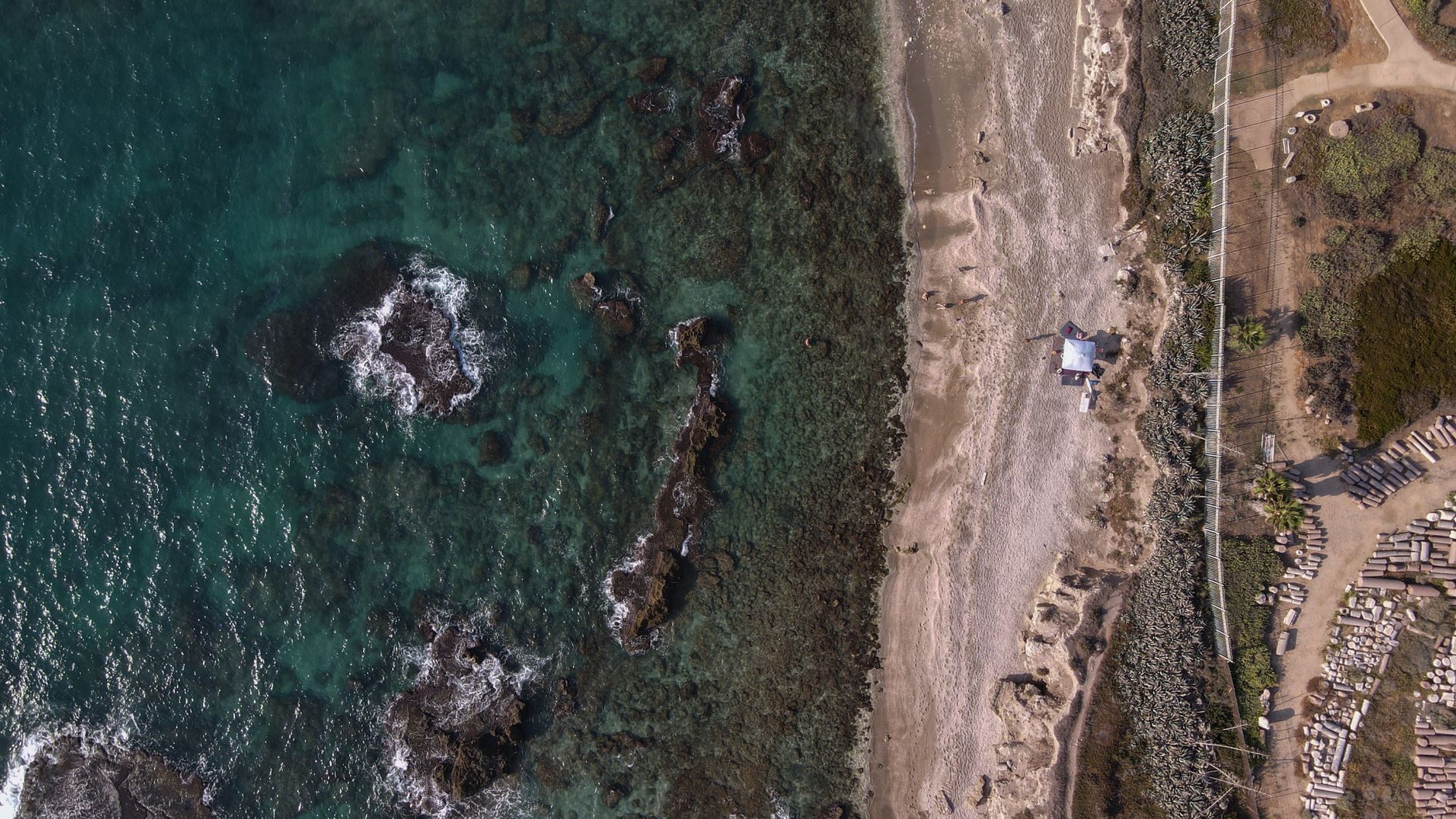
In a sun-drenched courtyard of a Dubai school, just a stone's throw from the turquoise waters of Jumeirah Beach, a group of Year 9 students huddled around a portable charging station. Their faces, illuminated by the screens of their control tablets, held the focused intensity of young engineers. This wasn't a recess activity, but a lesson in urban planning, data collection, and the ethical considerations of surveillance. Their mission: map the changing coastal erosion patterns, using their fleet of small, nimble drones.
For too long, the integration of technology in education has been a promise whispered in policy papers and grant applications, rather than a vibrant reality in the classroom. We have seen projectors replace blackboards, and tablets supplant textbooks, yet the fundamental pedagogy often remains unchanged. The drone, however, offers a different narrative. It forces a reimagining of space, data, and the very act of inquiry.
From Theory to Flight: A New Pedagogy
The traditional science experiment, often confined to a lab with predetermined outcomes, can feel sterile, disconnected from the messy vitality of the real world. A drone project, by contrast, throws students into immediate, tangible challenges. Consider the students in Abu Dhabi designing flight paths to monitor falcons in protected reserves, or those in Sharjah programming autonomous drones to deliver medical supplies to simulated remote areas. These aren't just coding exercises; they are lessons in logistics, environmental science, and humanitarian aid. The abstract concepts of physics, lift, drag, thrust, are no longer equations on a whiteboard, but forces felt in the palm of a hand, observed in the graceful arc of a drone.
The Sky as a Whiteboard
The UAE, with its ambitious vision for smart cities and technological innovation, provides fertile ground for this kind of educational evolution. Imagine students in Masdar City using drones equipped with thermal cameras to identify inefficiencies in building insulation, or those in Ras Al Khaimah deploying them to assess agricultural health in arid landscapes. The sky above us, once an empty canvas, becomes a dynamic whiteboard for problem-solving, a living laboratory where data is gathered not from textbooks, but from direct observation.
This isn't merely about learning how to pilot a drone. It’s about cultivating computational thinking, spatial reasoning, and collaborative problem-solving. It’s about understanding the ethical implications of aerial data collection, the privacy concerns, and the societal impact of increasingly autonomous systems. These are the uncomfortable, yet essential, questions that traditional curricula often sidestep. The drone, in its quiet hum, forces us to confront them.
Beyond the Hype: Real-World Impact
Critics might dismiss drones in education as a passing fad, an expensive novelty. But the evidence from classrooms across the UAE tells a different story. We have witnessed Year 11 students in Dubai create 3D models of historical sites, aiding in their preservation, and university students in Al Ain developing drone-based solutions for traffic management. These aren't isolated incidents; they are part of a growing movement that understands that true STEAM education isn't about adding more technology, but about transforming the way we learn and apply knowledge.
The real impact is not just in the data collected or the sophisticated algorithms developed, but in the shift in perspective. Students move from passive recipients of information to active creators of knowledge, from consumers of technology to designers of solutions. The drone becomes an extension of their intellect, a tool that empowers them to ask bigger questions and seek bolder answers.
The integration of drones into the curriculum offers a powerful, albeit challenging, pathway to genuinely future-proofed education. It demands educators who are willing to step outside traditional comfort zones, and institutions that are prepared to invest not just in hardware, but in the pedagogical shifts required to harness its potential. The classroom, it seems, is no longer bound by four walls, but extends as far as the eye can see, or rather, as far as a drone can fly.
Frequently asked
With proper training, adherence to regulations, and age-appropriate models, drones can be safely integrated into the classroom. The focus should always be on responsible use and safety protocols.
While advanced projects are suited for older students, even primary school children can engage with basic drone concepts through block coding and simple flight tasks, fostering early interest in engineering and technology.
Beyond the drones themselves, schools need dedicated open spaces for flight, charging stations, and computers with appropriate software for programming and data analysis. Teacher training is paramount.
Drones can be integrated across subjects: physics for flight mechanics, geography for mapping, computer science for programming, and even art for aerial photography and videography. They offer a versatile platform for interdisciplinary learning.
Drones are not merely a novelty; they are tools that cultivate critical 21st-century skills such as computational thinking, problem-solving, and data analysis. As autonomous systems become more prevalent, understanding their operation and ethical implications will be crucial.
One piece of writing on AI in education. Every Monday morning. From the editors of NASCA, in seven countries. No spam, unsubscribe in one click.
Bring NASCA to your school.
If this piece resonated, the next step is a conversation. A real person from our team will reply within one working day.