
The Intelligence on the Breadboard: A Review of Edge AI in the Classroom
We tested the latest edge AI microcontrollers running 0.5B models directly in the classroom. When intelligence moves from the cloud to the breadboard, STEAM education regains its tactile soul.
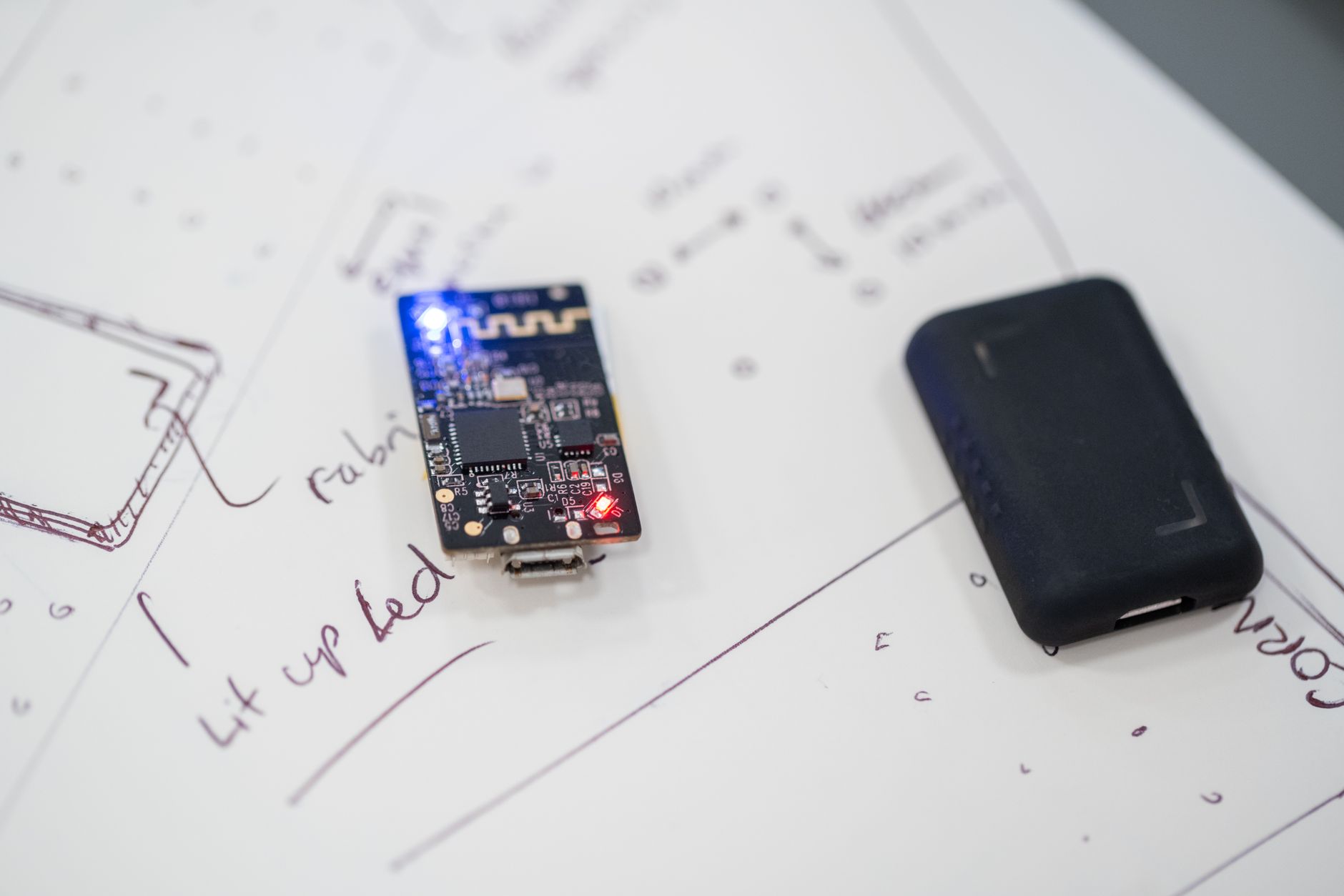
On a wooden laboratory table in south London, an eleven-year-old named Priya held a strip of copper tape against a potted maidenhair fern. Next to the pot sat a dark green circuit board the size of a matchbox, blinking a slow amber pulse. A ribbon cable connected the board to an omnidirectional microphone and a two-megapixel camera lens. Priya whispered a prompt directly to the silicon: "Check the transpiration rate and tilt the reflector." Within three hundred milliseconds, without touching any cloud server or Wi-Fi network, a miniature servo pivoted thirty degrees to angle a grow light toward the leaves.
The room smelled of damp potting soil, solder resin, and cold morning tea. That moment captured the quiet shift happening across physics and design classrooms this year. We have spent four years watching children stare into chat interfaces on glass screens. Now, small local models running directly on sub-five-watt edge silicon have arrived on school desks from Manchester to Bengaluru.
We tested three of the leading educational edge micro-controllers over the past term. Here is our assessment of how these small physical boards enrich the student experience.
The Arrival of On-Device Vision and Voice
For years, introducing artificial intelligence into school robotics required fragile cloud bridges. Teachers spent half the lesson debugging network firewalls, renewing API keys, and managing subscription credits. The newest generation of boards, led by the Seeed Grove Vision AI v3 and the Raspberry Pi AI Hat+ paired with local quantized weights, solves this cleanly.
These boards run compact five-hundred-million parameter vision-language models directly on their integrated neural processing units. They boot in four seconds. They draw power from a standard classroom battery pack.
Students observe an immediate loop between cause and physical effect. When a learner in Adelaide angles an ultrasonic wand toward an origami wing, the board processes the acoustic reflection locally, calculates lift ratios, and graphs the results on a pocket e-ink display. The speed is startling. Latency sits below eighty milliseconds. That immediacy keeps children inside the flow of physical experimentation.
Real understanding grows when computing touches materials with weight, texture, and resistance.
Students learn that intelligence in machines can be self-contained, modest in energy consumption, and completely private.
Tactile Programming Replaces the Blank Prompt Box
Screen-only chat prompts often turn students into passive spectators. The user types a sentence and waits for paragraphs of synthetic text to roll down the glass. Physical edge computing flips this dynamic completely.
On these test benches, code returns to its physical roots. Students clip alligator leads to capacitive fruit, wire rotary potentiometers, and align laser diodes. The local model acts as an analytical companion rather than an oracle.
During our trials in a Dubai middle school, eighth graders used edge vision boards to sort native date seeds by moisture content. The students trained a tiny visual classifier on forty seed samples on their lab table. They refined the lighting, adjusted the camera angle with 3D-printed brackets, and observed how shadows altered the model's confidence scores.
Through this process, the children discovered the mechanical realities of data collection. They saw firsthand that data is physical, shaped by dust, focal lengths, and afternoon sun. Computing became an outdoor, tactile discipline again.
Privacy by Physics, Independence by Design
School leaders frequently share their reservations regarding pupil data, biometric storage, and recurring software licensing fees. Edge silicon answers these administrative priorities with structural certainty.
When a device carries its weights in flash memory and lacks a network antenna, pupil privacy is guaranteed by physics rather than corporate terms of service. Voice recordings dissolve in local memory the instant the inference completes. Video streams never leave the copper traces of the circuit board.
For schools operating across varied bandwidth environments, from rural New South Wales to municipal schools in Pune, this architecture offers equal footing. A student running an environmental sensing rig on a riverbank needs only sunlight and an alkaline battery. The laboratory functions with identical precision atop a mountain ridge or inside a basement physics studio.
Our own curriculum teams at NASCA have begun pairing these edge boards with sustainable architecture projects. Children design micro-climates for model buildings, using localized reasoning chips to manage passive airflow shutters. They treat the model as a responsive component, like a thermostat or an operational amplifier, rather than a mystic presence.
The Nuance of Hardware Constraints
Working with constrained hardware brings its own educational virtue. When students write code for an edge board with only two gigabytes of unified memory, they encounter the elegance of thrift.
They select lightweight 4-bit models. They trim background audio noise. They learn why integer quantization preserves energy while floating-point precision drains pocket cells. These parameters turn abstract computing theory into concrete engineering decisions.
The documentation on several consumer boards still assumes advanced Linux fluency. Setup guides frequently introduce command-line syntax that slows down younger learners. We found that pairing the hardware with visual block-based compilers allowed primary school pupils to jump straight into sensor calibration without stumbling over kernel configurations. The successful classrooms were those that treated the terminal screen as a workshop dial rather than a barrier.
The Material Reality of Thought
The screen had its decade. It taught millions of children how to read digital interfaces and assemble modular software blocks. Yet the most profound scientific insights consistently occur where abstract reasoning collides with physical matter.
By placing localized, tiny reasoning engines into breadboards, gearboxes, and terrariums, we invite young minds to build systems that breathe, sense, and react in the physical world. The lab bench feels alive again, humming with the quiet energy of independent thought and mechanical curiosity.
Frequently asked
Edge AI microcontrollers run compact, quantized neural networks entirely on on-board neural processing silicon. Unlike cloud-based systems, they require zero internet connection, store no personal data remotely, and process sensor data in milliseconds.
Students ages ten and older can work with block-based edge tools, while secondary and university learners can write Python code to manipulate model weights, sensor arrays, and physical actuators.
Hardware kits from makers like Seeed Studio and Raspberry Pi currently range between thirty and seventy dollars per student station, requiring no ongoing subscription fees or cloud server credits.
Because inference occurs entirely on the physical silicon without transmitting audio or video streams to external networks, student privacy is secured at the hardware layer.
One piece of writing on AI in education. Every Monday morning. From the editors of NASCA, in seven countries. No spam, unsubscribe in one click.
Bring NASCA to your school.
If this piece resonated, the next step is a conversation. A real person from our team will reply within one working day.