Beyond the Brief: Crafting Tomorrow's Global Careers
The world of work is shifting, not just in technology but in our very understanding of what a "career" can be. We look at how ambition, curiosity, and global connectivity are reshaping futures for young learners everywhere.
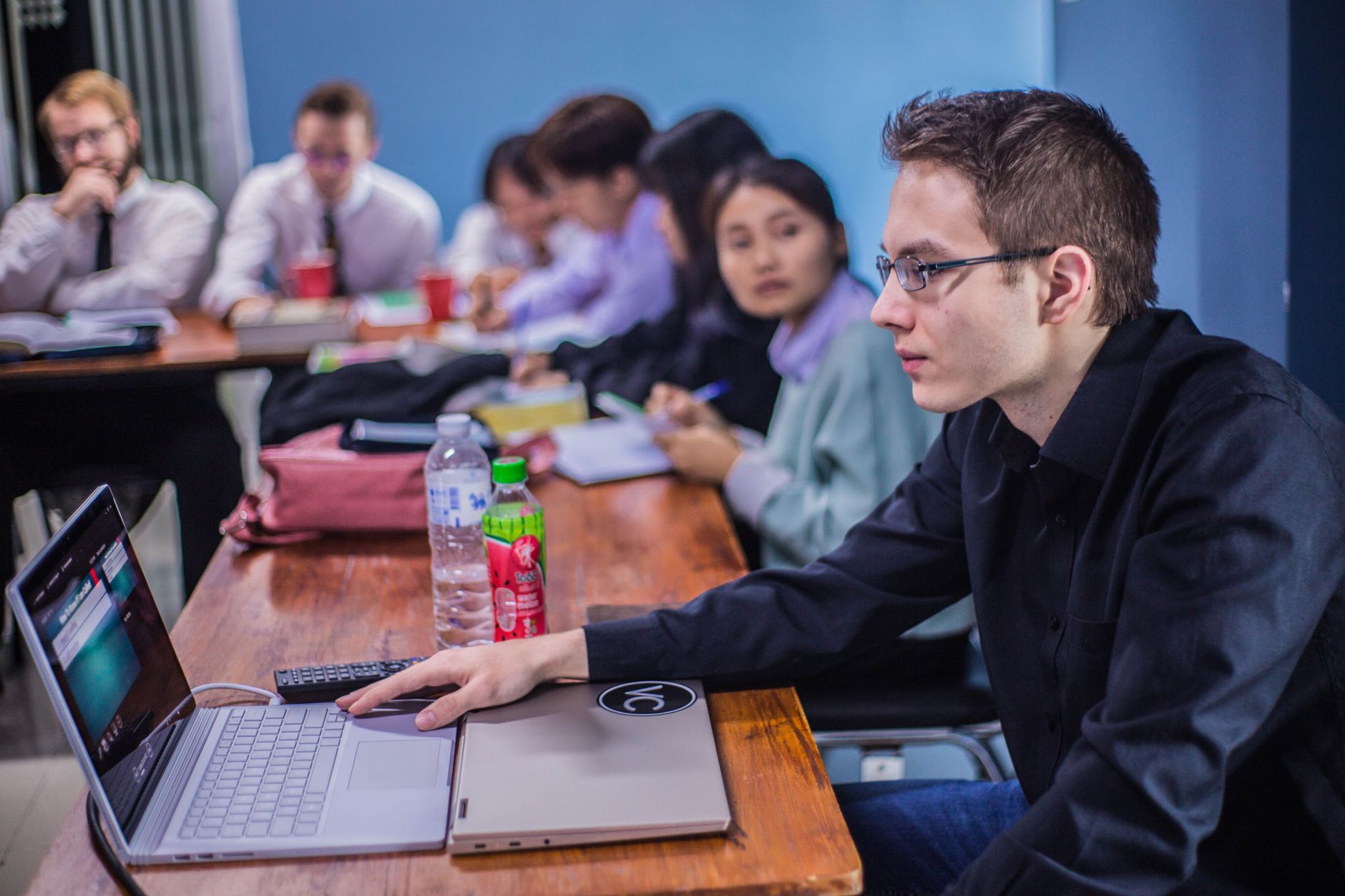
It was a Tuesday afternoon in 2026, and the humid air of a Mumbai classroom hummed with the quiet focus of students huddled over holographic simulations. Not of city planning, or even quantum physics, but of sustainable aquaculture in the fjords of Norway. Their teacher, Ms. Devi, circulated, offering a suggestion on resource allocation, her voice soft against the whirring fans. This wasn't a vocational course; it was simply another day in a science lesson, yet it was also a quiet rehearsal for a truly global career.
We often hear about the "jobs of the future," a phrase that, while well-intentioned, can feel distant, abstract. Our focus at NASCA has always been on the concrete, the tangible steps a young person takes today that build towards a fulfilling tomorrow. What we observe, from Riyadh to Rochester, is a profound redefinition of professional pathways. It’s less about a rigid ladder and more about a dynamic, interconnected ecosystem.
The Polymath's Advantage
The idea that one must choose a single, lifelong profession feels increasingly quaint. The most compelling careers we see emerging are often hybrids, blending disparate fields. Consider the biomedical ethicist with a background in data science, or the urban planner who is also a trained cultural anthropologist. These aren't just niche roles; they represent a fundamental shift in how value is created. Schools that foster multidisciplinary thinking, encouraging students to draw connections between art and engineering, history and artificial intelligence, are preparing minds that will thrive in this complex landscape. A student who understands both the algorithms of a smart city and the social fabric of its inhabitants holds a distinct advantage.
We see this in the ambitious projects undertaken by students in Singapore, where environmental design students collaborate with robotics teams to develop autonomous urban farms. Or in the UK, where young researchers in bioengineering discuss the ethical implications of their work with philosophy undergraduates. This cross-pollination of ideas is not just academic exercise; it is the very engine of innovation, leading to solutions for global challenges that no single discipline could address alone.
The Global Classroom, The Global Career
Geographical boundaries, once formidable barriers to certain professions, are dissolving. A software developer in Accra can contribute to a project headquartered in San Francisco, just as a climate scientist in Melbourne can collaborate daily with colleagues in Berlin. The pandemic accelerated this trend, but the underlying forces were always there: affordable communication, cloud computing, and a shared understanding of global problems.
This means that a "global career" is no longer the exclusive domain of diplomats or multinational executives. It is accessible to anyone with a laptop and an internet connection. What becomes paramount is cultural fluency, an empathy for diverse perspectives, and the ability to collaborate across time zones and traditions. Schools that cultivate these skills through international partnerships, virtual exchanges, and a curriculum rich in global contexts are doing more than just teaching; they are opening a world of possibilities.
In our conversations with educators in the UAE, a recurring theme is the importance of "global competency" – not merely as a subject, but as an embedded approach to all learning. It’s about understanding that a local problem in Dubai might have echoes in a village in India, and that solutions often emerge from a collective, global wisdom.
Entrepreneurship as a Mindset
Entrepreneurship is often framed as starting a business, but we view it more broadly: as a mindset of initiative, problem-solving, and value creation. Whether a young person eventually founds a company, leads a department, or develops a groundbreaking scientific theory, the entrepreneurial spirit is key. It’s about seeing a gap and devising a way to fill it, not waiting for instructions.
This isn't about turning every student into a startup founder. It’s about fostering a proactive approach to one's own professional journey. We watch with interest as students in Australia, even in their early teens, are encouraged to identify community needs and prototype solutions. This could be anything from designing a local recycling initiative to developing a simple app that helps manage school assignments. The technical skills are important, of course, but the underlying lesson is far more profound: you can shape your world.
This mindset is nurtured when schools offer opportunities for genuine project-based learning, where students are given autonomy and challenged to overcome real-world constraints. It’s in these moments of productive struggle that resilience is built, and the capacity for innovation truly blossoms. A child who learns to iterate, to fail gracefully, and to try again, is acquiring the most valuable career skill of all.
What truly distinguishes the successful career paths of tomorrow is not a specific degree or a particular job title, but a blend of adaptability, interdisciplinary understanding, and a deeply ingrained sense of purpose. We are not predicting specific jobs; we are observing the qualities that make any job, in any field, meaningful and impactful on a global stage.
Frequently asked
It means encouraging your child to explore interests across different subjects, like science and art, rather than specializing too early. This helps them connect ideas and solve problems in novel ways, which is highly valued in emerging global careers.
Global preparation isn't just about international travel. It's about curriculum design that includes diverse perspectives, fostering empathy, and using technology for virtual collaboration across borders. Emphasize cultural fluency and shared global challenges.
We view entrepreneurship as a mindset of initiative and problem-solving, not just starting a business. It's about teaching students to identify needs, create solutions, and take ownership of their ideas, skills that are vital in any career path.
Rather than specific subjects, focus on developing interdisciplinary skills. Encourage deep learning in areas of passion, but also push for connections between subjects. Critical thinking, creativity, collaboration, and communication remain paramount.
Technology acts as an enabler, dissolving geographical barriers and creating new fields. Understanding how to use technology responsibly and innovatively – from AI to data science – is crucial, but always balanced with human skills like ethics and empathy.
One piece of writing on AI in education. Every Monday morning. From the editors of NASCA, in seven countries. No spam, unsubscribe in one click.
Bring NASCA to your school.
If this piece resonated, the next step is a conversation. A real person from our team will reply within one working day.