Beyond the Books: India’s Olympiad Future
In 2026, Olympiad preparation in India means more than textbooks; it means unlocking deeper understanding and critical thought.
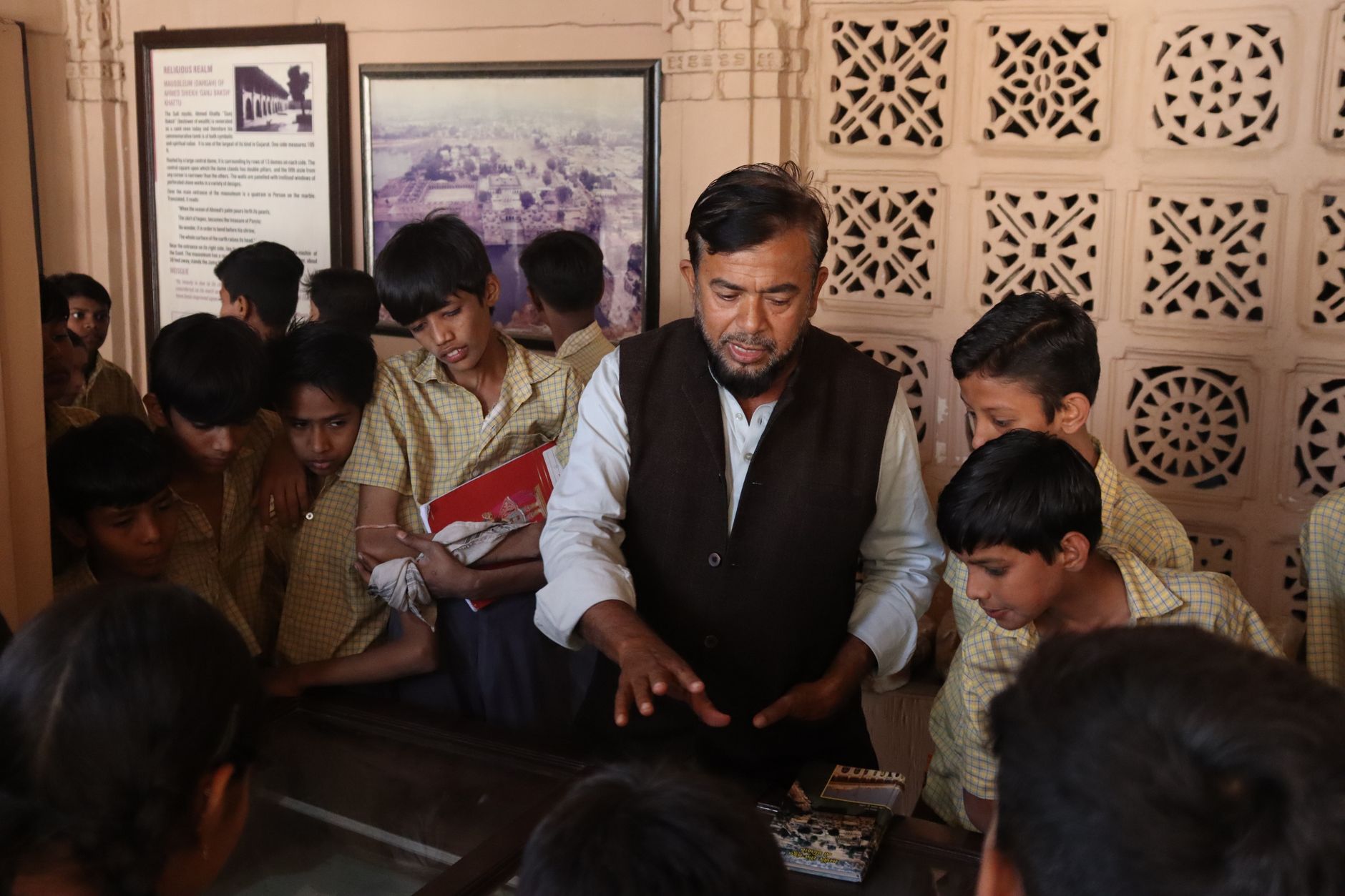
It was a Tuesday afternoon in Chennai, 2026. The air conditioning hummed softly in the coaching institute, a stark contrast to the humid street outside. A group of thirteen-year-olds sat, not hunched over thick physics textbooks, but rather engaged with holographic projections of complex orbital mechanics. Their teacher, Ms. Priya Sharma, guided them, prompting questions, not answers. This scene, once a futuristic dream, is becoming the quiet reality of Olympiad preparation across India.
We have long admired the sheer dedication of Indian students. Their capacity for rigorous study is unparalleled. Yet, the global stage of Olympiads demands more than just memory recall. It asks for inventive problem-solving, a fluid understanding of concepts, and the ability to connect disparate ideas. For too long, our approach, while producing champions, often overlooked the joy of discovery.
The Shift to Conceptual Mastery
The shift began subtly. Five years ago, we saw the early adoption of adaptive AI platforms. Today, these platforms are not just tutors; they are personalized mentors. They identify a child's intuitive leaps and their specific sticking points, offering bespoke learning pathways. A student struggling with stoichiometry in Delhi might be offered a virtual lab simulation, while another in Bangalore might engage with an interactive historical timeline of chemical discovery. This is learning tailored to the individual mind.
It is no longer about cramming formulas. It is about understanding the 'why' behind each equation, the story behind each scientific principle. Olympiads now present problems that are less about brute-force calculation and more about elegant, creative solutions. We are seeing a generation of students who can articulate their thought processes with remarkable clarity.
The Power of Collaborative Learning
Walk into any forward-thinking school in Pune or Hyderabad, and you will see study groups formed not by proximity, but by shared intellectual curiosity, often connected across cities via secure digital platforms. These aren't just friends helping friends. These are young minds, leveraging sophisticated tools to pool knowledge, debate theories, and collectively tackle challenges that once seemed insurmountable. A student in Mumbai can collaborate on a complex mathematical proof with a peer in Kolkata, both benefiting from diverse perspectives and approaches.
"The true measure of intelligence is not knowledge but imagination."
This collaborative spirit fosters resilience. It teaches students that seeking help, and offering it, strengthens their own understanding. It prepares them not just for an exam, but for the collaborative demands of real-world scientific research and innovation.
Beyond the Medal: Skills for a Lifetime
The glittering medals are wonderful, of course. They acknowledge immense talent and hard work. But the true prize of this evolved preparation is far more enduring. Children are developing critical thinking, a deep-seated curiosity, and an analytical rigor that will serve them in any field. They learn to question, to experiment, to fail gracefully, and to try again.
These are the skills that will empower them to lead, to innovate, and to solve the grand challenges of our future, whether they pursue quantum physics at IISc Bangalore or develop sustainable technologies in Silicon Valley. The Olympiad journey, when approached with this broader vision, becomes a crucible for future leaders, not just future scientists.
The trajectory of Olympiad preparation in India is exciting. We are witnessing a profound evolution, moving from a focus on competition to a celebration of true intellectual growth. Our children are not merely preparing for tests; they are cultivating minds capable of extraordinary things. They are learning to think, deeply and expansively, equipped with tools we could only dream of a generation ago. This is what truly prepares them for the world unfolding before them.
Frequently asked
Preparation is shifting from rote memorization to deep conceptual understanding, aided by personalized AI platforms and collaborative digital learning environments.
AI acts as a personalized mentor, identifying individual learning styles and challenges, offering tailored content, and facilitating virtual simulations.
While medals are still an aspiration, the primary focus has broadened to cultivating critical thinking, problem-solving skills, and a genuine love for learning, which are valuable beyond the competition.
Students collaborate across cities using digital platforms, pooling knowledge, debating theories, and solving complex problems together, fostering resilience and diverse perspectives.
Beyond academic success, students develop analytical rigor, curiosity, and adaptability, preparing them for future leadership and innovation in any field they choose.
One piece of writing on AI in education. Every Monday morning. From the editors of NASCA, in seven countries. No spam, unsubscribe in one click.
Bring NASCA to your school.
If this piece resonated, the next step is a conversation. A real person from our team will reply within one working day.