The Open Field: Why the Next Generation Is Leaving the Career Ladder Behind
As rigid professional tracks dissolve, the next generation is trading fixed job titles for durable polymathic craft. Here is how modern careers are quietly being remade.
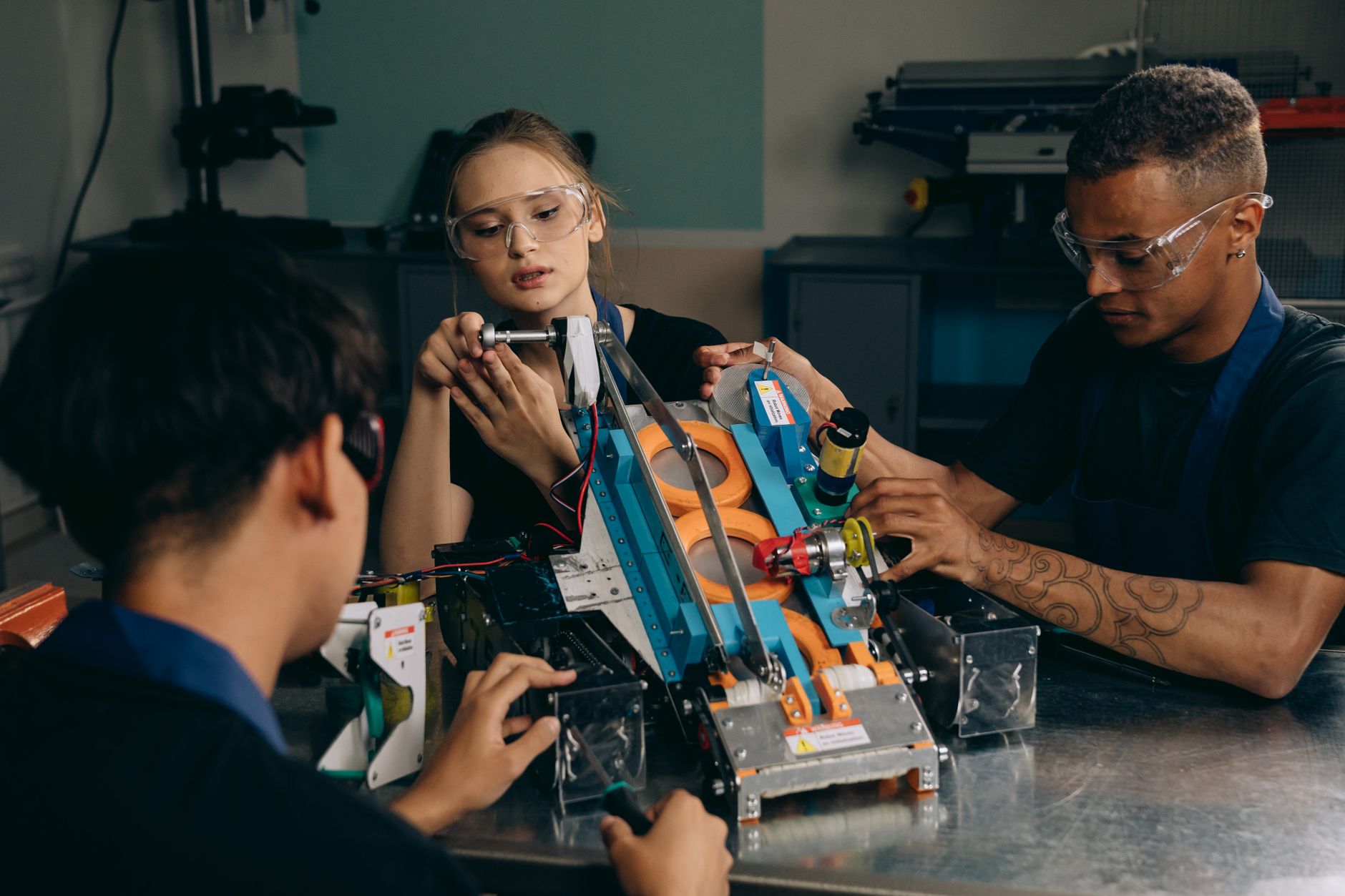
On an unseasonably warm Tuesday in Zurich, three second-year mechanical engineering students gathered around a workbench to debug an autonomous orchard harvester. One checked the torque sensors on the robotic arm. Another watched the real-time simulation mirror running inside a local neural network. The third was recalculating the business model for micro-orchards in Valais. None of them could tell you their exact job title five years from now. They smiled when asked. They liked the ambiguity.
For two generations, career planning resembled laying track for a high-speed train. You selected a terminus early. You laid ties in secondary school, poured ballast during your degree, and expected the train to glide into a station marked Senior Systems Architect by age thirty-four. That track has ended in an open field. The landscape beyond it is remarkably fertile, provided you bring boots instead of a timetable.
The disappearance of the fixed title
Visit a design studio in Tokyo or a biotechnology laboratory in Cambridge, and you observe something striking. People are working on problems, while titles exist purely for human resources databases. A graduate who studied molecular genetics is writing inference pipelines for protein folding. An urban planner in Singapore spends her mornings tuning generative fluid dynamics models to reduce wind tunnels around social housing estates.
We often meet school principals who feel anxious about this fluidity. They want a neat list of twenty future careers to print on glossy brochures for open days. We encourage them to shelve the list. Children entering secondary school this autumn will spend their adult lives moving across five or six distinct professional chapters. Each chapter will demand a novel synthesis of craft, taste, and computational literacy.
The most resilient career path is no longer a ladder. It is an expanding repertoire of capabilities applied to stubborn, interesting problems.
When careers uncouple from rigid taxonomy, education gains permission to become adventurous again. Instead of grooming sixteen-year-olds for predetermined roles that software might absorb by graduation, schools can focus on building intellectual stamina. The young person who understands how physical systems interact with digital intelligence retains options in any market.
The rise of the polymathic apprentice
In our work across classrooms from Melbourne to Riyadh, we see an appetite for what we think of as the polymathic apprentice. These are learners who pair deep technical fluency with tactile craft. They write Python with precision, yet they also understand how an aluminum bracket bends under stress on a CNC mill.
Consider Maya, an eighteen-year-old in London who spent six months designing an underwater sensor pod for estuarine monitoring. She wrote the telemetry firmware. She negotiated with local river authorities for mooring permits. She also hand-soldered the power distribution board when the first batch failed in brackish water. When asked whether she considers herself an electrical engineer, a programmer, or an environmental scientist, she pauses. She calls herself an investigator.
Employers are taking note. The global organisations we converse with in late 2026 are weary of hyper-specialised graduates who freeze the moment an unexpected variable appears outside their niche. They seek builders who can sit between disciplines. They want the thinker who reads an ethics paper over breakfast, audits algorithmic weights before lunch, and helps physically wire an actuator in the afternoon.
Portfolios replace the transcript
Paper credentials tell an employer where someone sat. A living portfolio demonstrates what they built when nobody gave them step-by-step instructions.
In Bangalore, a consortium of technology founders recently abandoned standard degree filters for technical intake. They ask candidates for two things. First, a link to an open-source contribution or a documented physical artefact. Second, a fifteen-minute video explaining a time their design failed, accompanied by the specific logic they used to recover. They want to witness how a mind behaves under strain.
This shift liberates teachers. When assessment prizes project-based documentation over rote examination, the classroom transforms into an active studio. Students document their iterations, preserve their intermediate drafts, and learn to narrate their technical decisions with lucidity. They leave school with evidence of competence, which carries far more weight than an alphabet soup of standardised test scores.
Anchoring in timeless human agency
Artificial intelligence handles procedural synthesis with astonishing speed. It drafts code, generates CAD meshes, and balances chemical equations in milliseconds. Consequently, the value of routine cognitive labor continues to settle toward zero.
What appreciates in value is judgement. It is the discernment to know which problem is worth solving in the first place. It is the capacity to sit with a client in Dubai, understand the cultural nuances behind their municipal logistics challenge, and translate that human need into an elegant technological brief. Empathy, aesthetic sensibility, and physical ingenuity remain the bedrock of adult contribution.
Students who thrive over the coming decades will view advanced artificial intelligence as an intellectual bicycle. It amplifies their reach, yet their own muscles steer the frame. They will move comfortably between abstract calculation and tangible execution, unbothered by shifting market buzzwords.
The future belongs to individuals who see their work as an enduring craft rather than a static post. By releasing our attachment to vintage career tracks, we give the rising generation room to build a world far more interesting than the one we inherited.
Frequently asked
A living portfolio contains public code repositories, documented hardware builds, design rationale logs, and evidence of how an individual diagnosed and recovered from real-world failures.
Rather than training students for singular professions, schools prepare them best by pairing computational literacy with physical fabrication, design taste, and interdisciplinary problem-solving.
Specialisation remains valuable, but hyper-specialisation without cross-disciplinary context is brittle. The strongest candidates combine deep mastery in one technical area with broad literacy across adjacent fields.
Begin by asking your child what problems they care to investigate rather than what title they want to hold. Encourage projects where digital tools combine with physical materials to produce observable results.
One piece of writing on AI in education. Every Monday morning. From the editors of NASCA, in seven countries. No spam, unsubscribe in one click.
Bring NASCA to your school.
If this piece resonated, the next step is a conversation. A real person from our team will reply within one working day.