The Renaissance of Indian Olympiad Preparation
In Bengaluru and beyond, AI-assisted theorem proving is restoring Olympiad prep to its classical roots, replacing rote drilling with genuine mathematical beauty.
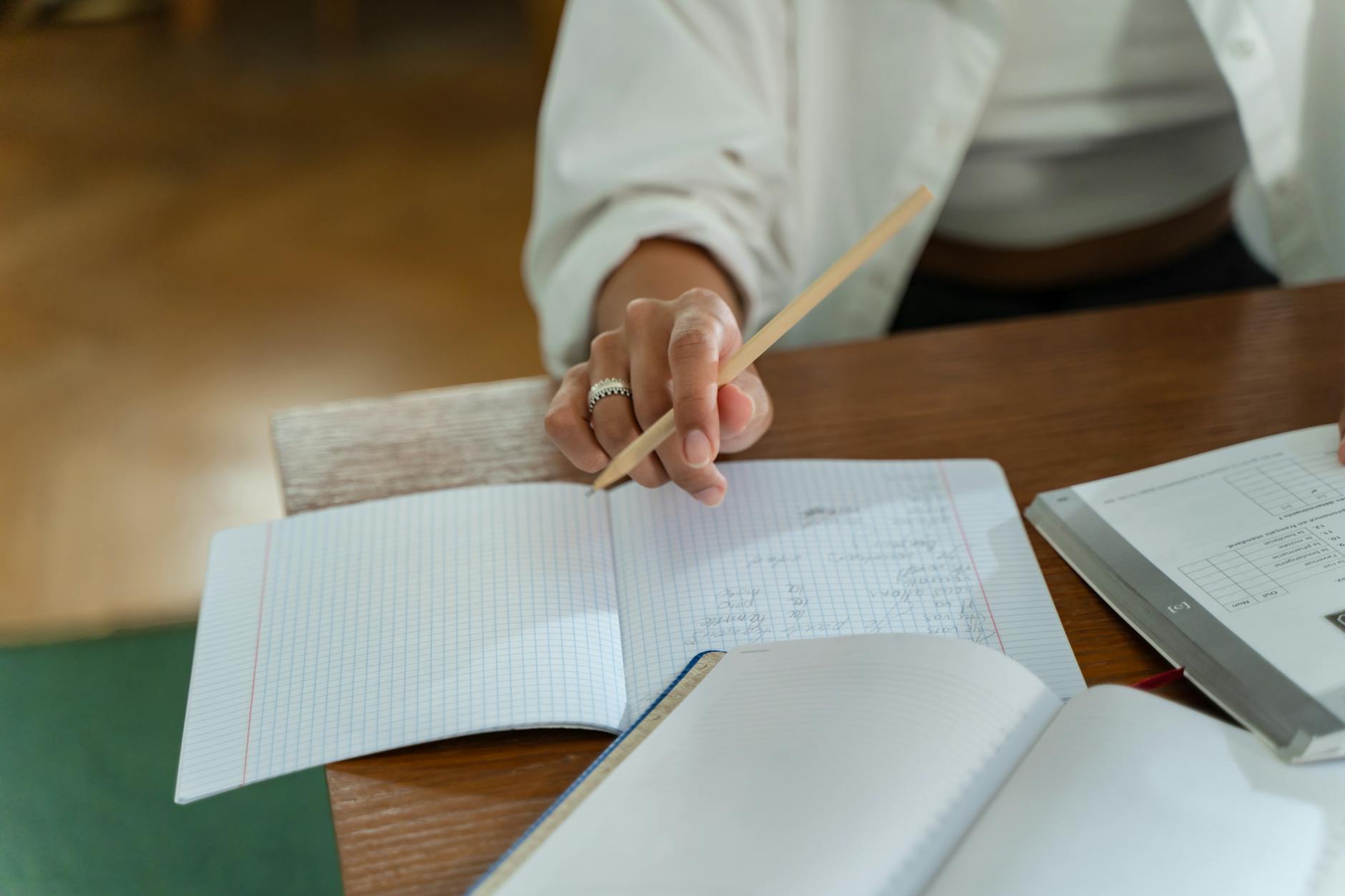
On a cool Saturday morning in Malleshwaram, Bengaluru, fourteen-year-old Ananya sat at a wooden desk with a single pencil and three sheets of blank paper. Across the screen in front of her, an interactive proof assistant waited. The prompt came from the Indian National Mathematical Olympiad archive of 2012, a problem about cyclic quadrilaterals and circumcircles that used to take six pages of handwritten algebra. Ananya did not touch the keyboard for twenty minutes. She watched the lines cross on paper, sketched an auxiliary triangle, and smiled.
The culture of competitive problem-solving in India is undergoing a quiet, dignified renovation. For decades, the road to the International Science and Mathematical Olympiads went through grueling test-prep corridors in Kota, Hyderabad, and Pune. Students memorized lemma catalogs. They survived on brute volume.
Now, an elegant shift is visible across Indian classrooms. The arrival of synthetic mathematical reasoning engines has turned Olympiad preparation into an art of architecture rather than an endurance drill.
Beyond the Lemma Catalog
When machine systems can solve textbook combinatorics in four seconds, human calculation loses its status as the peak virtue. India's top math and physics mentors are celebrating this change.
Earlier generations spent hundreds of hours calculating long expansions to ensure computational accuracy. Today, students in Chennai, Chandigarh, and Ranchi use interactive theorem provers to test their intuition in minutes. If an auxiliary construction fails, the software points out the counterexample immediately. The feedback loop drops from three days of waiting for a mentor's red pen to ten seconds of clear visual critique.
True mathematical maturity shows when a student knows which question to ask next, long after the formulas run dry.
This allows young minds to focus on structural insight. They learn to recognize symmetry, parity, and topological invariance. These are the deep, aesthetic qualities of mathematics that traditional coaching academies often sidelined in favor of repetitive drills.
The Resurgence of the Classical Notebook
You might expect high-tech tools to banish physical stationery. The opposite has happened.
In our studio sessions across Delhi and Bengaluru, the most successful Olympiad candidates keep two things on their tables: a bound notebook with heavy cream pages, and an ambient neural dialogue system. The machine serves as a sparring partner, like a grandmaster sitting silently on the veranda.
The dialogue proceeds through Socratic tension. A student proposes an invariant: "Suppose the sum of angles along the lattice remains constant modulo four." The partner generates three non-trivial test cases. The student spots the flaw, draws a revised diagram by hand, and continues.
Paper remains the home of original thought. The screen exists purely to verify the integrity of the bridges the mind builds.
Distributed Brilliance Across the Subcontinent
Geography used to dictate destiny in India's Olympiad landscape. If you lived near the premier coaching clusters, you had access to problem sets vetted by former medalists. If you lived in a small district like Alwar or Kottayam, you relied on aged photocopies passed down through generous older cousins.
The network effect of AI-augmented mentorship has dismantled that boundary. A student in a government school in Jabalpur now examines the same advanced functional equations as a prodigy in South Mumbai. Both receive real-time, step-by-step dialectical coaching tailored to their specific conceptual leaps.
Teachers in these smaller towns report a surge in pure curiosity. Freed from the anxiety of grading piles of complex proofs by hand, educators spend their afternoons sitting beside students, debating alternative paths to an answer. The teacher becomes a co-explorer.
Cultivating the Architecture of Wonder
Preparation for the International Olympiads in Informatics, Physics, and Mathematics is ultimately an apprenticeship in wonder. It instills an instinct for clarity that serves a learner for seventy years, whether they grow up to design fusion reactors, lead semiconductor research, or compose symphonies.
By automating the mundane mechanics of verification, modern tools return Indian students to the spirit of Bhaskara and Ramanujan. Mathematics becomes an exploratory journey again. The goal is no longer just securing an international gold medal, though Indian teams continue to collect them in record numbers. The greater prize is the habit of calm, sustained contemplation.
A fourteen-year-old sitting in a quiet room with a pencil and an infinite universe of ideas is one of the most hopeful sights in modern education. The digital tools around her are quiet, attentive, and secondary. The mind remains the master architect.
Frequently asked
Modern neural assistants act as real-time sparring partners, verifying lemmas and offering counterexamples in seconds so students spend their energy on structural strategy rather than mechanical computation.
Paper remains central for exploratory sketching, spatial reasoning, and intuitive synthesis. Digital provers are best used downstream to check steps and test edge cases.
Intelligent tutoring systems democratize access to elite Olympiad coaching, allowing curious learners in smaller towns to access identical dialectical rigor without relocating to coaching hubs.
One piece of writing on AI in education. Every Monday morning. From the editors of NASCA, in seven countries. No spam, unsubscribe in one click.
Bring NASCA to your school.
If this piece resonated, the next step is a conversation. A real person from our team will reply within one working day.