Singapore Schools: Building Tomorrow's Innovators Today
From the bustling classrooms of Singapore, we observe a future-focused education system that actively cultivates creativity and critical thinking. This dispatch explores how a nation smaller than many cities is setting a global benchmark for preparing students for an AI-powered world.
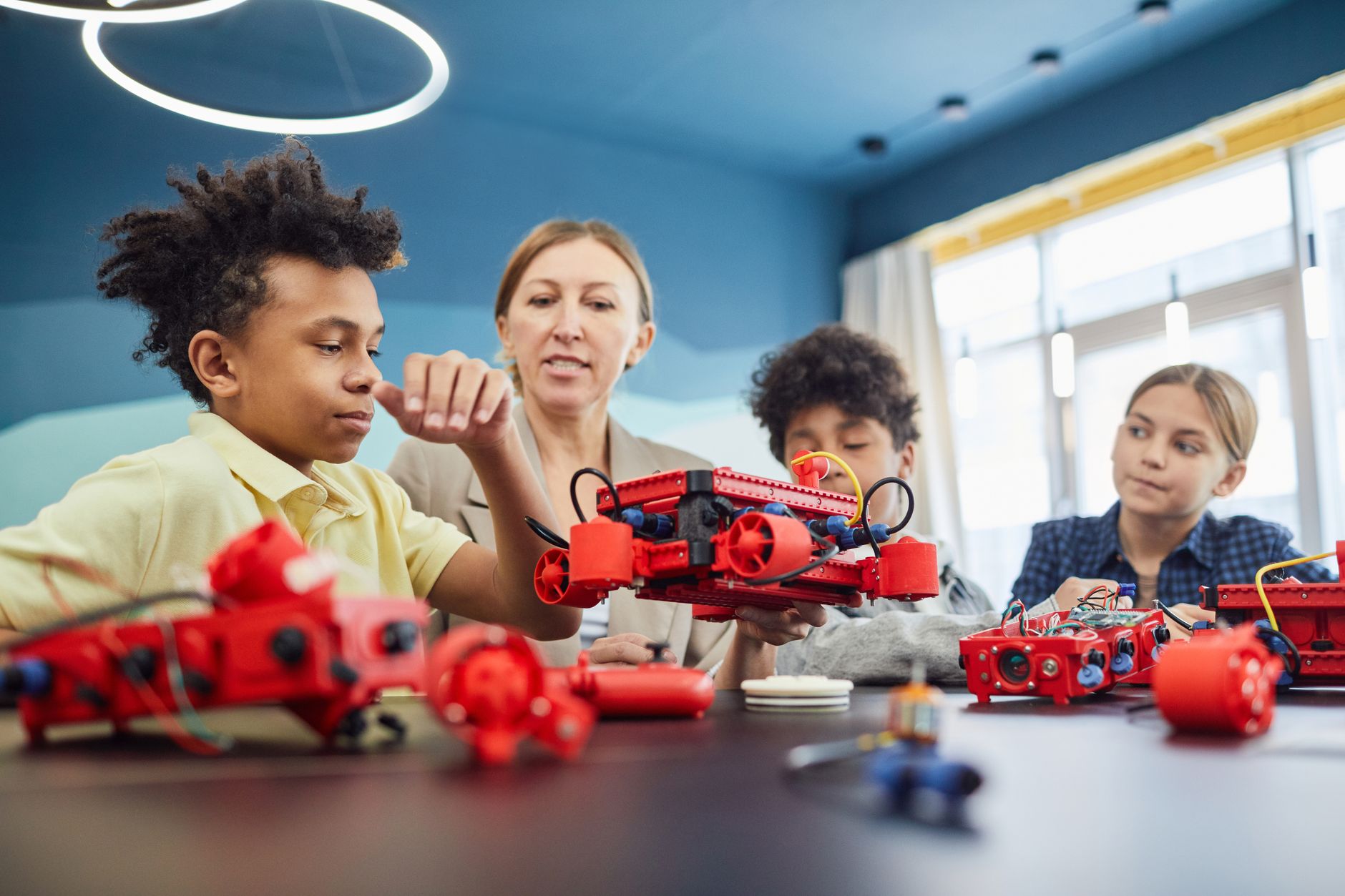
In a sun-drenched classroom at Tanjong Katong Primary School, young minds are not just memorizing multiplication tables. They are, instead, grappling with the ethical implications of a robot companion, debating whether its decisions should prioritize efficiency or empathy. A few blocks away, at the National University of Singapore, undergraduates are not merely coding algorithms; they are designing AI models to predict climate patterns, integrating principles of marine biology and data science. This is Singapore, a city-state where the future of education is not a distant aspiration, but a daily practice.
We at NASCA have always believed in learning through doing, in fostering environments where curiosity takes root and blossoms into discovery. Observing Singapore’s approach, particularly its emphasis on computational thinking from an early age and its sustained investment in teacher professional development, reminds us of the universal principles that underpin truly effective STEAM education. This isn't about replicating a system wholesale, but understanding the philosophy that drives its success.
The Design of Deep Learning
The Ministry of Education in Singapore speaks often of "Desired Outcomes of Education," a framework that goes beyond test scores to emphasize character development, critical thinking, and civic literacy. This isn't rhetoric; it shapes curricula. Consider the PISA results, where Singapore consistently ranks at the top. These outcomes reflect an education system that deliberately moves away from rote learning, encouraging students to analyze, synthesize, and apply knowledge in novel ways. Projects often involve real-world challenges, from optimizing urban transport routes to designing sustainable food solutions for vertical farms, requiring collaboration across disciplines.
We've seen similar project-based learning flourish in our partner schools in Dubai and London, where students are given the space to fail, iterate, and ultimately create. Singapore’s lesson here is about systemic commitment. It's about ensuring that every teacher, every principal, understands that fostering a child's problem-solving capacity is as vital as teaching them grammar. The national curriculum, often seen as rigid in other contexts, here acts as a scaffold for innovation.
Cultivating a Culture of Inquiry
Innovation doesn't happen in a vacuum; it's nurtured. Singapore’s education system actively promotes a "Growth Mindset," a concept popularized by Carol Dweck, integrated into teacher training and classroom pedagogy. Teachers are encouraged to view student struggles as opportunities for growth, rather than indicators of failure. This shift in perspective is subtle but profound.
"Education is not the filling of a pail, but the lighting of a fire." This ancient wisdom feels remarkably current in Singaporean schools, where the emphasis is less on content delivery and more on sparking a lifelong love for inquiry.
Walk into a secondary school science lab in Jurong, and you're unlikely to see students passively observing experiments. Instead, they are designing their own, formulating hypotheses, and meticulously recording data, often using digital tools that extend their analytical capabilities. This active engagement is a cornerstone of effective STEAM education, providing students with the agency to direct their own learning. It prepares them not just for examinations, but for the complex, ever-evolving challenges of adulthood.
Teachers as Architects of Future Learning
At the heart of Singapore's educational prowess are its educators. The National Institute of Education (NIE), Singapore's sole teacher training institute, is globally renowned. Teaching is a highly respected profession, attracting top talent, and continuous professional development is not an afterthought; it's an expectation. Teachers are regularly upskilled in areas like AI literacy, computational thinking, and innovative pedagogies. This investment ensures that classrooms are led by individuals who are not just experts in their subjects, but also adept at fostering future-ready skills.
For instance, we recently observed a workshop at the NIE where primary school teachers were learning to integrate AI ethics into storytelling and drama. This proactive approach ensures that as technology evolves, the people guiding our children are always a step ahead, ready to integrate new tools and concepts thoughtfully. It's a commitment to lifelong learning, mirrored in the expectations placed upon students. This continuous cycle of learning and application is what makes the Singaporean model so resilient and forward-looking.
The global landscape is shifting. AI is no longer a futuristic concept but a present reality. Singapore’s education system, with its unwavering focus on deep learning, a culture of inquiry, and exceptionally well-prepared educators, provides a powerful testament to what is possible. It shows us that with clear vision and sustained effort, any nation, regardless of size, can build an education system that truly prepares its young people to innovate, adapt, and thrive in the world of tomorrow.
Frequently asked
Singapore integrates project-based learning, emphasizes critical thinking over rote memorization, and fosters a 'Growth Mindset' where students are encouraged to experiment and learn from mistakes. The curriculum provides a framework for deep inquiry rather than strict content delivery.
Teachers in Singapore receive continuous professional development through institutions like the National Institute of Education. They are regularly upskilled in areas like AI literacy and innovative pedagogies, ensuring they can effectively prepare students for future challenges and integrate new technologies thoughtfully.
While direct replication might not be feasible, the underlying principles are highly transferable. These include a systemic commitment to critical thinking, fostering a culture of inquiry, and continuous investment in teacher development. These philosophies can inspire educational reforms globally.
AI is integrated not just as a tool to be learned, but as a subject for ethical debate and practical application from an early age. Students are taught computational thinking and are encouraged to design AI solutions for real-world problems, ensuring they understand both its potential and its implications.
One piece of writing on AI in education. Every Monday morning. From the editors of NASCA, in seven countries. No spam, unsubscribe in one click.
Bring NASCA to your school.
If this piece resonated, the next step is a conversation. A real person from our team will reply within one working day.