The Return of the Tactile Instrument
A review of the quiet, tactile AI instruments arriving in global classrooms this autumn, trading bulky virtual headsets for physical inquiry and peer collaboration.
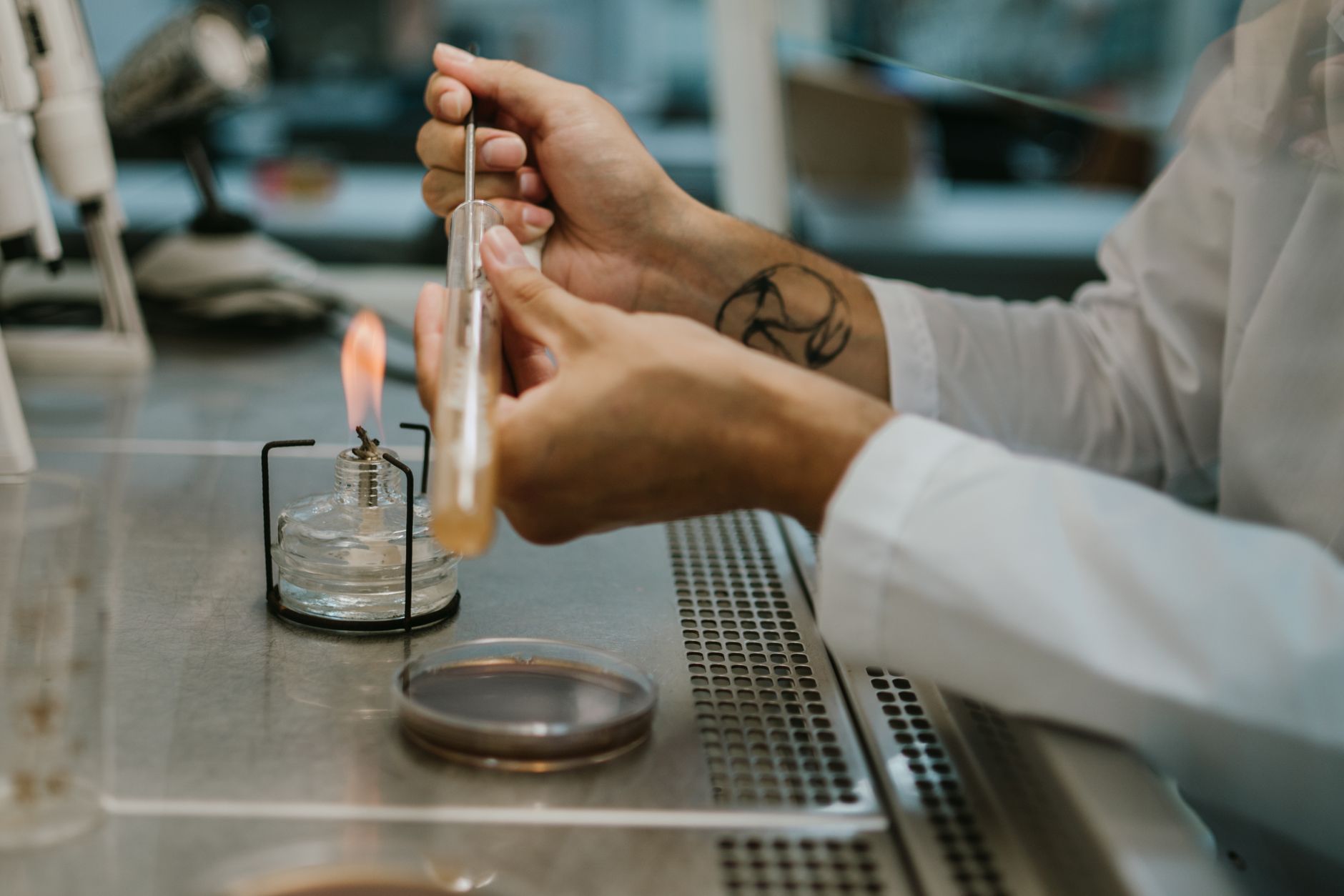
On a rainy Tuesday morning in Leeds, eleven-year-old Priya tapped the glass of an audio-first microscope. She had collected moss from the Victorian brick wall behind her primary school. Instead of displaying a flat photograph or offering a multiple-choice quiz, the bench tool spoke softly through an earbud. It asked her what she noticed about the cell margins. Priya paused, squinted, and suggested they looked like overlapping roof tiles. The machine agreed, drew a vector line around the chloroplasts, and asked her why green pigments might settle near the upper rim.
Listening to Priya, you realise how quickly classroom technology matured over the past three years. We lived through the awkward phase of software that tried to play teacher, quiz-master, and hall monitor simultaneously. The finest learning instruments arriving in schools this autumn do something far more modest, and therefore far more ambitious. They act as quiet cognitive partners.
Here, we review the three distinct categories of hardware and computational models shaping international STEAM classrooms this term.
The Tactile Inference Engine
For decades, science laboratories separated the messy work of physical touch from the clean work of calculation. A student poured a beaker, took a measurement by hand, and then walked across the room to type numbers into a spreadsheet. That border has dissolved.
The most compelling devices this year are sensor-rich physical instruments with small, local language models embedded directly on the motherboard. Take the portable spectral analysers now circulating through secondary schools in Singapore and Melbourne. These pocket-sized spectrometers read soil chemistry in seconds. Rather than spitting out raw percentages of nitrogen or phosphorus, they generate contextual audio reflections tailored to the student's recent field notes.
The gain here is immediate. When an instrument interprets field data in real time, the student remains outdoors, boots in the mud, testing a second hypothesis before the bell rings. Learning stays anchored in the sensory world.
The greatest tools do not pull the student's eyes away from the specimen. They draw attention deeper into it.
Spatial Math Without the Virtual Goggles
Headsets had their brief season of hype. Most school administrators we speak with from Riyadh to Manchester quietly boxed them away by late 2025. They were cumbersome to sanitize, disorienting for younger learners, and isolated children from their peers.
The quiet triumph of 2026 belongs to desk-level optical projection. These compact overhead projectors read wooden geometric manipulatives on a plain tabletop, using low-latency computer vision to overlay vectors, flow dynamics, and tension forces directly onto the physical wood.
In a pilot studio we observed in Bengaluru, two seventh-graders were assembling a balsa wood arch. As they placed each keystone, the projector painted a subtle gradient of blue and amber light across the timber, displaying live compressive stress calculations. When the students shifted a support by two millimetres, the amber warning shifted instantly to a tranquil sea-green. The maths became visible, tactile, and social. Both children kept their hands on the wood, talking to each other rather than staring into isolated plastic visors.
Ambient Synthesisers for the Art-Science Boundary
The third category belongs to tools that merge studio arts with hard physical science. We see this shift clearly in architecture and acoustic design electives across Dubai and California.
New generative synthesis tables let students draft physical architectural models out of clay, card, and wire. As the student alters the shape of an auditorium model, an ambient acoustic simulation plays the reverberation characteristics of the room through directional speakers. The learner claps their hands. The system returns the echo of that clap as if it were bouncing off cedar panels or poured concrete.
This loop of physical adjustment and acoustic verification turns theoretical wave mechanics into an intuitive craft. A fourteen-year-old grasps the relationship between wall curvature and sound dispersion long before she encounters the differential equations in university.
What Makes an Instrument Worth Buying
Schools face thousands of catalogues. Procurement committees often drown in technical specifications that bear little connection to classroom life. Our evaluation framework across NASCA studios rests on three clear requirements.
First, does the instrument encourage peer conversation? A screen that absorbs a single child in silence belongs in the home, perhaps, but rarely in a collaborative studio.
Second, can a child explain why the machine reached a conclusion? Black-box prediction belongs in warehouse logistics, not in pedagogical tools. If an algorithm identifies a crystalline lattice, it must reveal its chain of visual reasoning so the pupil learns how to look.
Third, does it respect physical material? The digital layer should enrich clay, glass, brass, and soil, rather than replacing them with pixels.
Children possess an instinctive feel for authenticity. Priya in Leeds did not care about the processor speed of her microscope. She cared that it helped her spot the tiny machinery of a moss leaf before her break-time biscuit went cold. When technology honors that spark of curiosity, it earns its place on the laboratory bench.
Frequently asked
Classroom tools with local inference operate entirely on the device without sending student data to external servers, ensuring complete privacy, zero latency, and functional fieldwork in remote outdoor environments.
Optical desk projectors allow multiple children to touch physical objects simultaneously, maintaining eye contact and peer speech. Virtual headsets isolate students and create logistical burdens for teachers.
Prioritize devices that require physical interaction, show their intermediate reasoning steps, and stimulate dialogue between students rather than solo screen immersion.
One piece of writing on AI in education. Every Monday morning. From the editors of NASCA, in seven countries. No spam, unsubscribe in one click.
Bring NASCA to your school.
If this piece resonated, the next step is a conversation. A real person from our team will reply within one working day.