The AI Tutor: Not Just a Gadget
AI tutors are transforming education, offering personalized learning experiences that go beyond traditional methods. This piece explores their impact, challenges, and future potential.
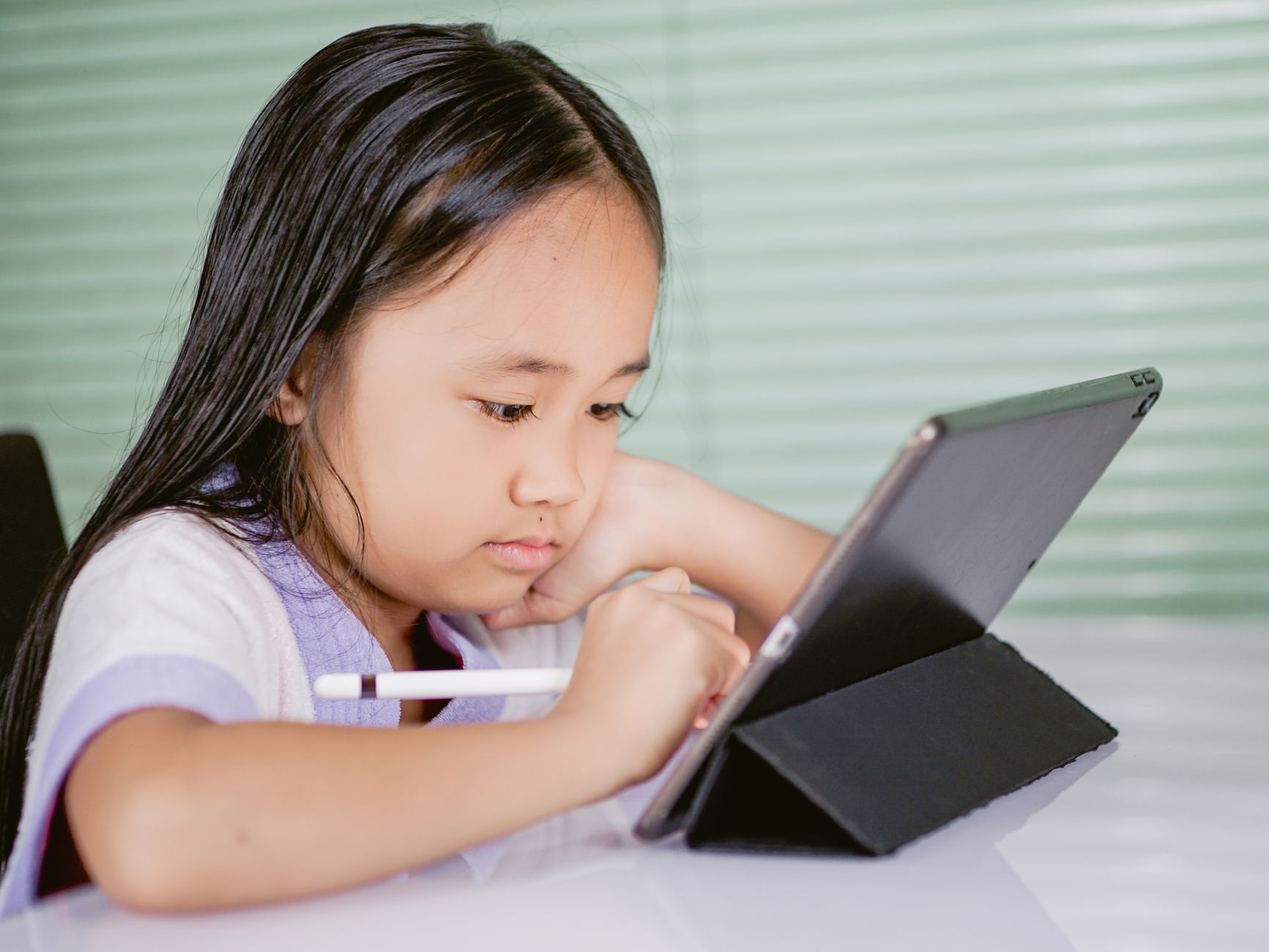
In a Mumbai classroom, a year five student, struggling with long division, used to simply shrink in her seat. Now, a tablet in front of her, displaying an AI tutor, gently guides her. It doesn't judge, doesn't rush. It breaks down the problem into smaller, digestible chunks, offering visual aids and interactive explanations until the concept clicks. This isn't a scene from a distant future; it's happening today, not just in India but in Riyadh, in Nairobi, and across school districts in the American Midwest.
The Promise of Personalization
The most compelling argument for the AI tutor is its inherent capacity for personalization. For decades, educators have dreamt of truly individualized learning paths. The reality of a classroom, however, with one teacher managing twenty, thirty, or even fifty students, has always made this an aspiration, not a practice. AI tutors shatter this limitation.
They adapt to a student's pace, learning style, and knowledge gaps. They don't just offer a single solution; they can present multiple approaches to a problem. They track progress with a granularity that human teachers, burdened with administrative tasks, simply cannot achieve. This means a student who grasps a concept quickly isn't held back, and one who needs more time isn't left behind. Our own research at NASCA, observing pilot programs in Singapore and the UK, shows a demonstrable increase in student engagement and comprehension in mathematics and early literacy when AI tutors are integrated thoughtfully.
Beyond the Algorithm: The Human Element
Yet, the conversation around AI tutors often devolves into a binary choice: human versus machine. This is a false dilemma. A truly effective educational ecosystem will always require the nuanced empathy and relational intelligence of a human educator. An AI tutor can explain the Pythagorean theorem, but it cannot inspire a love for geometry. It can correct a grammar mistake, but it cannot understand the unspoken anxieties that might be hindering a student's writing.
The real power of the AI tutor lies in its ability to free up the human teacher. Imagine a classroom where teachers spend less time on rote grading and repetitive explanations, and more time on mentorship, fostering critical thinking, and addressing emotional needs. The AI becomes a highly efficient teaching assistant, handling the heavy lifting of differentiation, allowing the human to focus on the uniquely human aspects of education.
Navigating the Ethical Minefield
Of course, the widespread adoption of AI tutors is not without its complexities. Data privacy is paramount. What kind of student data is being collected, how is it stored, and who has access to it? These are not trivial questions. The potential for algorithmic bias, where an AI might inadvertently reinforce existing inequalities, must be meticulously addressed through rigorous testing and ethical oversight. We must also guard against the "black box" problem, ensuring that the AI's decision-making process is transparent and auditable.
Accessibility is another crucial consideration. If these powerful tools are only available to affluent schools and families, the digital divide will only widen. Governments and educational bodies have a responsibility to ensure equitable access, perhaps through national licensing agreements or subsidized programs. The aim should be to level the playing field, not to exacerbate existing disparities.
The Future Classroom: A Collaborative Space
Consider the classrooms of tomorrow, perhaps in Abu Dhabi or London. They will not be dominated by solitary students staring at screens. Instead, they will be vibrant, collaborative spaces where human teachers orchestrate a symphony of learning. AI tutors will be instrumentalists in this orchestra, providing personalized instruction, instant feedback, and rich data insights.
The teacher, empowered by these tools, becomes a facilitator of deeper understanding, a guide in critical inquiry, and a mentor in social-emotional development. The AI tutor is not here to replace the teacher, but to augment their capabilities, to amplify their impact, and to fundamentally reshape what is possible within the four walls of a classroom. It is not just a gadget; it is a profound shift in how we conceive of learning itself.
Frequently asked
No. AI tutors are tools designed to augment human teachers, handling repetitive tasks and providing personalized instruction, thereby freeing up teachers to focus on mentorship, critical thinking, and social-emotional development.
AI tutors offer personalized learning paths, adapt to individual student paces and styles, provide granular progress tracking, and can free up human teachers for more impactful, relational work.
Key concerns include data privacy, the potential for algorithmic bias reinforcing inequalities, and ensuring transparency in the AI's decision-making process. Equitable access to these tools is also crucial.
Governments and educational bodies should explore national licensing agreements or subsidized programs to ensure that AI tutors are not exclusively available to affluent schools and families, thus preventing a widening of the digital divide.
Yes, NASCA has observed pilot programs in Singapore and the UK, noting demonstrable increases in student engagement and comprehension in mathematics and early literacy when AI tutors are thoughtfully integrated.
One piece of writing on AI in education. Every Monday morning. From the editors of NASCA, in seven countries. No spam, unsubscribe in one click.
Bring NASCA to your school.
If this piece resonated, the next step is a conversation. A real person from our team will reply within one working day.