Desert Dreams, Robotic Realities: The UAE’s STEAM Horizon
In classrooms from Dubai to Al Ain, a new generation designs and builds, transforming sand-swept visions into robotic realities. This is the story of how the UAE champions STEAM projects, fostering innovation from an early age.
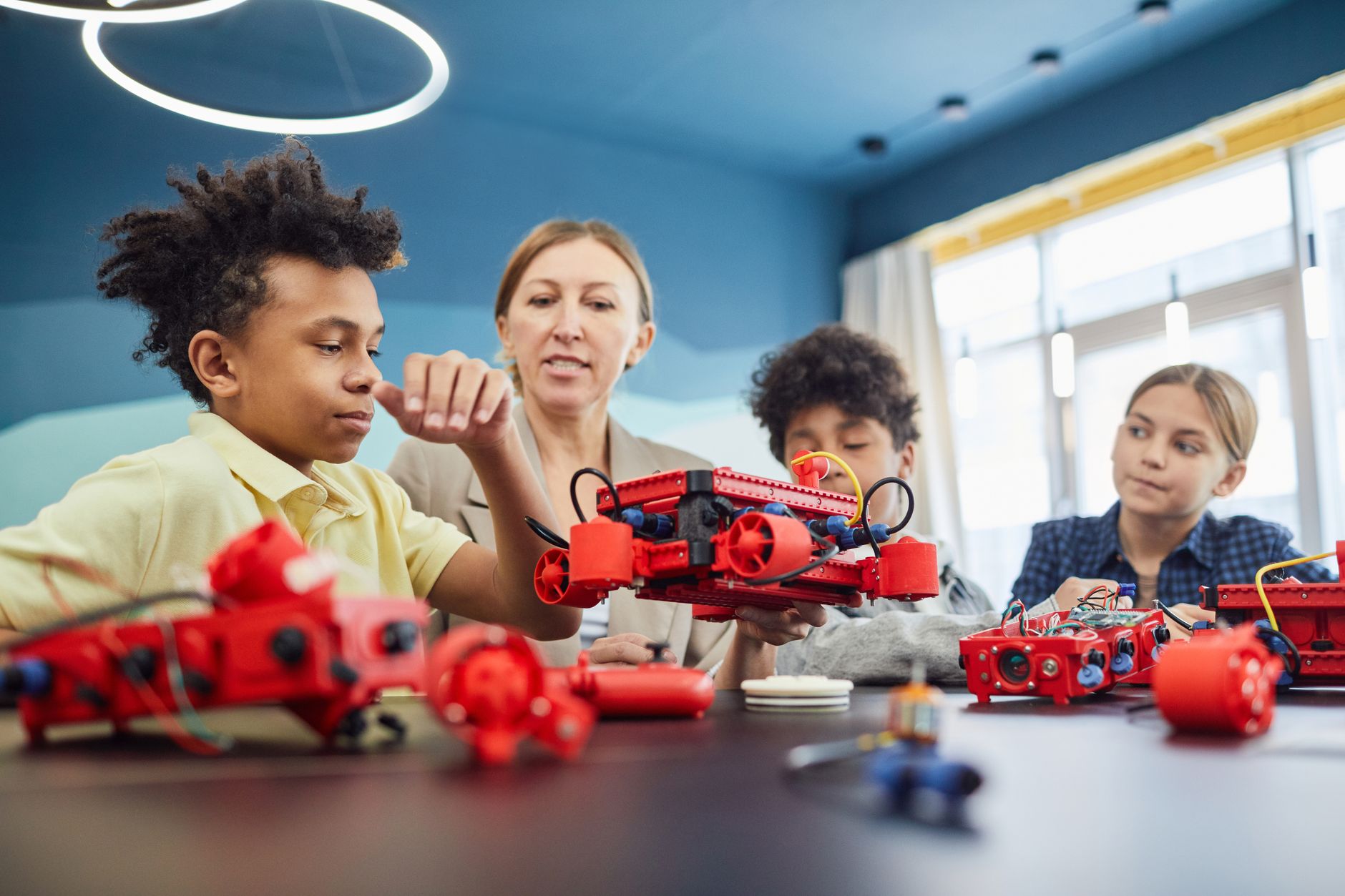
It was a Tuesday afternoon in a classroom overlooking the Burj Khalifa. Ten-year-old Fatima, her safety goggles slightly askew, meticulously wired a small servo motor. Beside her, Ahmed calibrated the ultrasonic sensor of their autonomous desert rover, designed to monitor plant hydration in arid environments. This wasn't a university lab; it was a primary school in Dubai, a testament to the UAE's ambitious embrace of STEAM education, turning theoretical knowledge into tangible, working projects.
We see this scene repeated across the Emirates. From the bustling innovation hubs of Masdar City to the quiet, determined efforts in Ras Al Khaimah, children are no longer just learning about science or technology. They are doing it. They are problem-solving, building, and iterating, often with real-world applications that speak directly to the UAE's unique challenges and aspirations.
The Bedrock of Innovation: Early Engagement
The foundation of the UAE's STEAM success lies in its commitment to early and sustained engagement. It's not enough to introduce robotics in high school; the spark must be ignited much earlier. We have observed schools, often supported by government initiatives, integrating project-based learning from kindergarten. Simple coding games, LEGO robotics, and basic circuit building become as fundamental as reading and writing. This early exposure cultivates a comfort with complex problem-solving and a fearless approach to experimentation, traits that are crucial for future innovators.
Consider the annual "Young Scientist" competitions in Sharjah, where elementary students present sustainable city models powered by self-designed solar panels, or demonstrate water purification systems using locally sourced materials. These events aren't just showcases; they are incubators of critical thinking and collaborative spirit. Children learn to articulate their ideas, defend their designs, and work together to refine their prototypes, skills far beyond rote memorization.
Bridging Academia and Industry
One of the most striking aspects of the UAE's approach is the deliberate effort to connect educational institutions with its burgeoning industries. Universities in Abu Dhabi are collaborating with energy companies to develop advanced materials for solar panels. High schools in Dubai are partnering with aviation firms to design drone delivery systems for urban environments. This isn't merely about internships; it’s about co-creating curricula and projects that address actual industry needs.
"The future workforce isn't just about degrees; it's about demonstrable skills and an understanding of real-world contexts. Our collaborations ensure that what is taught in the classroom is directly applicable to the challenges our nation faces."
This symbiosis means students are not working on abstract problems. Their projects often have immediate relevance to the UAE's strategic goals, whether it's desert agriculture, smart city infrastructure, or space exploration. It grounds their learning in purpose, providing a powerful motivator that transcends academic grades.
From Classrooms to Global Competitions
The impact of this focused investment is evident on the global stage. UAE student teams are consistently making their mark in international robotics challenges, AI hackathons, and sustainable design competitions. These aren't isolated victories; they are the cumulative result of a national strategy to foster a culture of excellence in STEAM.
We've seen teams from Dubai bring home top honors in FIRST Robotics, and students from Al Ain secure patents for their innovative water conservation technologies. These achievements broadcast a clear message: the UAE is not just a consumer of technology, but a significant contributor to its advancement. It instils national pride and inspires younger students to pursue similar paths, creating a virtuous cycle of aspiration and accomplishment.
The Role of Educators: Mentors and Facilitators
At the heart of any successful educational initiative are its educators. The UAE has invested heavily in professional development for teachers, equipping them not just with content knowledge, but with pedagogical approaches tailored for project-based STEAM learning. They are transitioning from lecturers to facilitators, guiding students through inquiry, encouraging failure as a learning opportunity, and fostering an environment of creative problem-solving.
In classrooms, this translates into teachers prompting open-ended questions, encouraging students to explore multiple solutions, and providing the resources needed for experimentation. It is a demanding role, requiring adaptability and a deep belief in the students' capacity for innovation. The growth we see in students is directly mirrored by the growth in their dedicated teachers.
A Future Built by Young Hands
The vision is clear: to cultivate a generation of innovators, problem-solvers, and critical thinkers who will drive the UAE's knowledge-based economy. The commitment to STEAM projects is not just about producing engineers or scientists; it’s about nurturing creativity, resilience, and a collaborative spirit in every child. The challenges of tomorrow, from climate change to space travel, demand minds that can connect disparate fields and forge novel solutions.
In the buzzing classrooms of the UAE, where young hands build and code, we witness the tangible construction of this future. It is a future shaped by curiosity, powered by inquiry, and built brick by robotic brick, designed to thrive in a rapidly evolving world. We are watching a nation invest in its most valuable resource: the unbounded potential of its children.
Frequently asked
Many schools in the UAE integrate project-based STEAM learning from kindergarten, using tools like LEGO robotics and basic coding games to build foundational skills.
Yes, there's a strong emphasis on collaboration between educational institutions and industries, ensuring projects address actual needs in sectors like energy, aviation, and smart city development.
UAE student teams consistently achieve success in international robotics challenges, AI hackathons, and sustainable design competitions, showcasing the nation's commitment to excellence in STEAM.
The UAE invests heavily in professional development for educators, training them to be facilitators of inquiry-based and project-based learning, rather than traditional lecturers.
The primary goal is to cultivate a generation of innovators, problem-solvers, and critical thinkers capable of driving the UAE's knowledge-based economy and addressing future global challenges.
One piece of writing on AI in education. Every Monday morning. From the editors of NASCA, in seven countries. No spam, unsubscribe in one click.
Bring NASCA to your school.
If this piece resonated, the next step is a conversation. A real person from our team will reply within one working day.