Higher Education

⚙️Mechatronics & Intelligent Systems

From mechanical first principles to autonomous systems.

Mechanical design, embedded programming and sensor systems, brought together the way they are in industry rather than as separate units. Students build, test and iterate real autonomous and mechatronic systems across the year.
  • 30 sessions
  • 10 modules
  • Proficiency level
  • Recommended: basic physics and programming exposure helpful, not required
  • One academic year, 2 sessions a week at 1 hour each
  • Institution-enrolled, live instruction
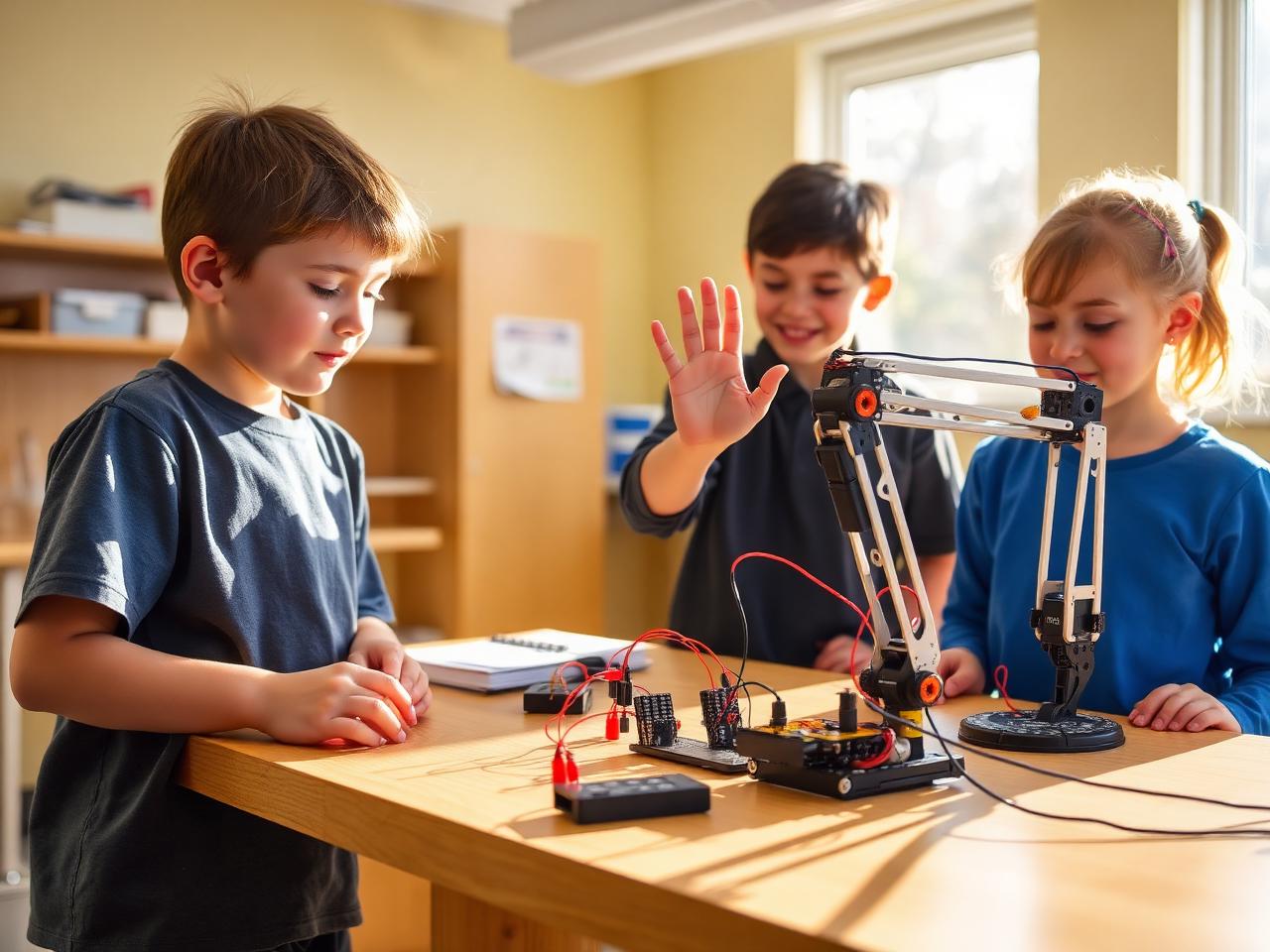
Children triggering a servo arm with an ultrasonic sensor

Quick answer

Mechatronics & Intelligent Systems is a proficiency programme from NASCA: 30 sessions, taught live by a NASCA instructor, closing with a NASCA × World STEM Federation certificate.

From mechanical first principles to autonomous systems.

What you'll learn

  • Apply engineering mechanics and electrical fundamentals to real machine design

  • Integrate sensors, microcontrollers and motion control into working systems

  • Design connected, communicating systems using IoT and industrial communication protocols

  • Build and program real robotic and autonomous systems, including edge AI and computer vision

Skills you'll gain

  • Engineering Mechanics & Machine Design
  • Electrical & Electronic Systems
  • Sensors & Instrumentation
  • Embedded Systems Programming
  • Motion Control
  • Communication Protocols
  • IoT & Connected Systems
  • Industrial Automation & Control Systems
  • Robotics & Robotic Systems
  • Edge AI & Autonomous Systems

Tools you'll use

  • Arduino / Raspberry Pi
  • Microcontroller IDEs
  • CAD software
  • Sensor and actuator kits
  • MQTT / IoT platforms
  • OpenCV
  • Robot Operating System (ROS) exposure

Details to know

  • WSF-accredited, individually verifiable Proficiency certificate
  • Taught in English
  • Live instructor-led sessions, delivered inside your institution's calendar

Programme overview

A full-year Proficiency specialisation spanning mechanical design, electrical and electronic systems, sensors, embedded programming, motion control, IoT and industrial automation, culminating in robotics, computer vision and edge AI on real autonomous systems.

Applied learning project

In the final module students design, build and demonstrate a working autonomous or robotic system, integrating sensors, control and, where relevant, edge AI, presented and defended as their capstone.

The curriculum

1. Engineering Mechanics & Machine Design

Sessions 1–3
  • The physical foundations of every build

2. Electrical & Electronic Systems

Sessions 4–6
  • Circuits, power and signal fundamentals

3. Sensors & Instrumentation

Sessions 7–9
  • How systems perceive the physical world

4. Microcontrollers & Embedded Systems

Sessions 10–12
  • Programming the brains of a physical system

5. Motors, Actuators & Motion Control

Sessions 13–15
  • How systems move, precisely and reliably

6. Communication Protocols & Interfaces

Sessions 16–18
  • How components and systems talk to each other

7. IoT & Connected Systems

Sessions 19–21
  • Connecting physical systems to networks and the cloud

8. Control Systems & Industrial Automation

Sessions 22–24
  • Feedback, control loops and automated processes

9. Robotics & Robotic Systems

Sessions 25–27
  • Bringing mechanics, electronics and code together

10. Computer Vision, Autonomous Systems & Edge AI

Sessions 28–30
  • Perception and intelligence at the edge, and the capstone

Earn a certificate

Complete all 30 sessions and the capstone to earn a WSF-accredited Proficiency certificate in Mechatronics & Intelligent Systems.

Offered by NASCA, accredited by the World STEM Federation.

Run Mechatronics & Intelligent Systems with your next cohort.

Tell us your department, cohort size and academic calendar. We quote after one conversation, not before.